January and February are cold and wet months in your garden and often a time for cleaning up, weeding, and pruning. But first to peek out in early Spring are the beautiful sunny faces of the trailing”Nasturtium” blossoms. A fast creeping herbal flower with petals 2-3 inches round, and multiple colors to choose from.
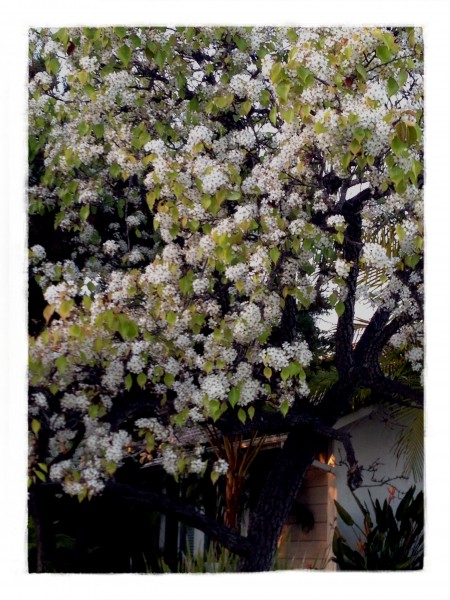
This flowering pear tree ” Chanticleer” is showcasing it’s beautiful white blossoms all over town.The dark rough trunk is a beautiful contrast from the lovely lacy flowers it produces.
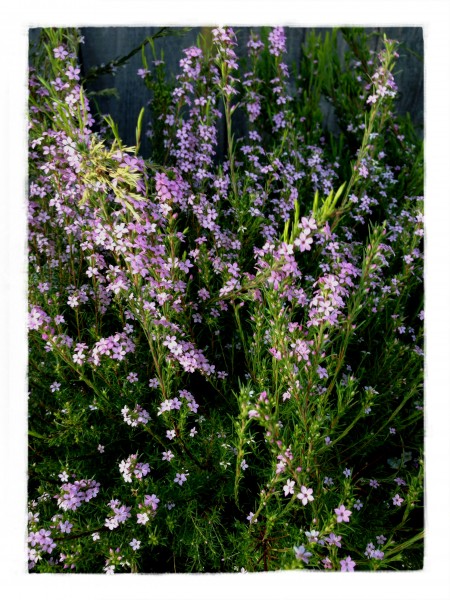
Small fragrant pink blossoms of this perennial “Breath of Heaven”, Coleonema pulchrumis, is just showing up as it produces a full bloom in early Spring. Brush alongside this bush and a wonderful fragrance soon surrounds you.
Fiery red blossoms flowing down the hard tough woody branches of the “Leptospermum, “Red Damask”, makes a grand entrance in your flower garden. A perfect cutting flower for your spring floral arrangements, it can also be purchased in white and pink.
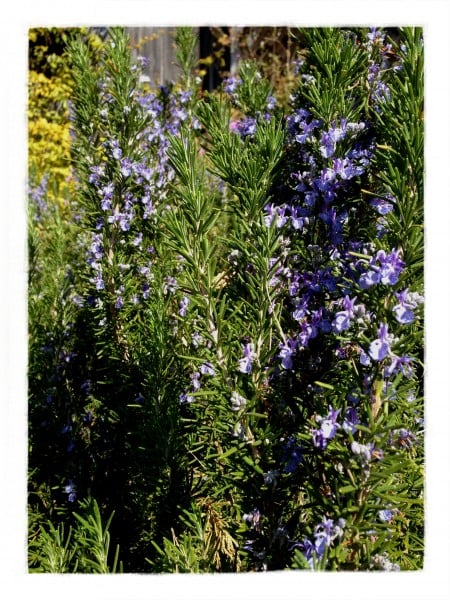
Rosemary ” Tuscan Blue” is one of my favorite landscape plants. With it’s strong herbal scent, perfect for cooking with, it’s a grand show during the cold winter months.
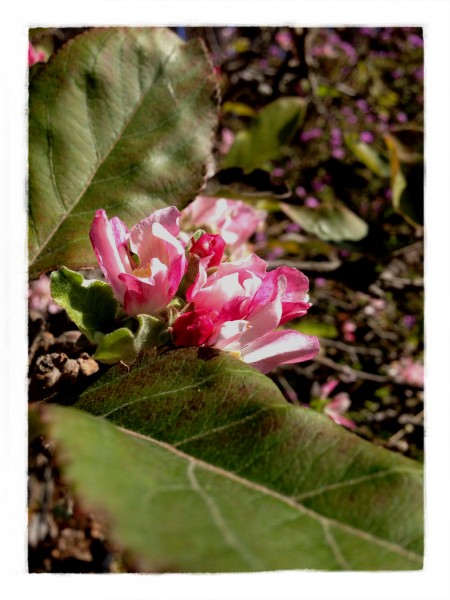
My “Anna” apple trees have the most beautiful pink blossoms during the early spring. Be ready for a large supply of large green-pink tart apples perfect for apple pies and desserts in the early summer months.
Blooming now, this “lilac vine” (Hardenbergia violacea), is a climbing perennial with light violet blossoms. It’s very delicate in nature and needs careful attention, but worth it’s beautiful floral show.
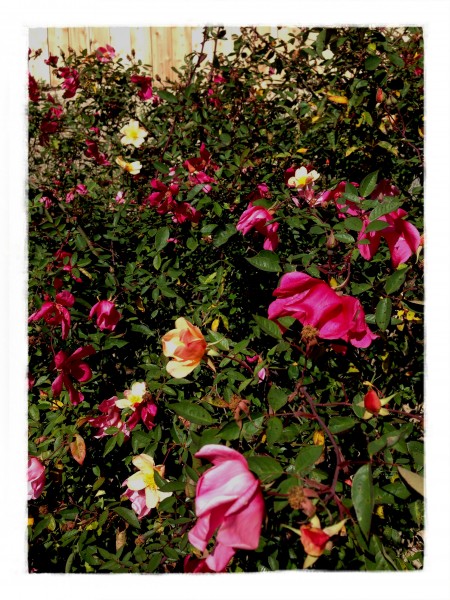
My climbing single petal rose is a knock-out as it over-performs every Winter in my garden. Even this monarch butterfly enjoys it’s three-colored blossoms.
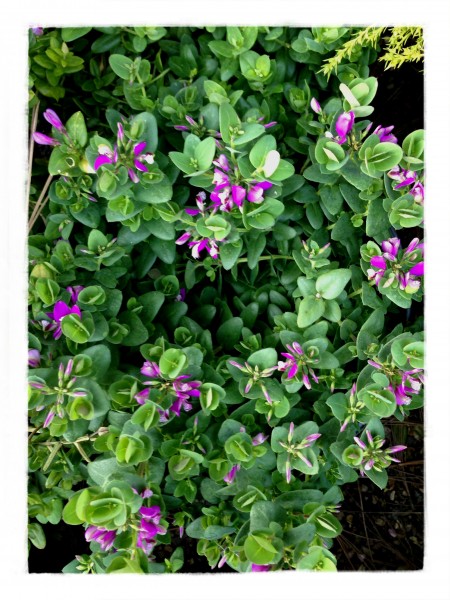
You can never go wrong with this lovely “Sweet Pea” bush, blooming effortless for several months in and out during the seasons. I use mine in a fence-like border with the “Tuscan Blue” rosemary plant.
The “California Poppy” found on side streets and hillsides in California growing wild is one of the most popular flowers to place in garden pots or borders in the coastal communities. Select from many bright shades and plant in clusters to brighten any dull spot in your landscape.
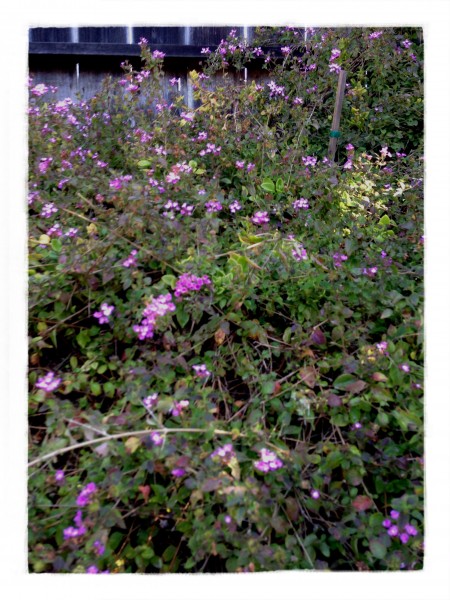
Planting on a slope is difficult, but I chose the ground cover purple verbena. I just love the winter backdrop of solid purple blossoms it provides in the garden.
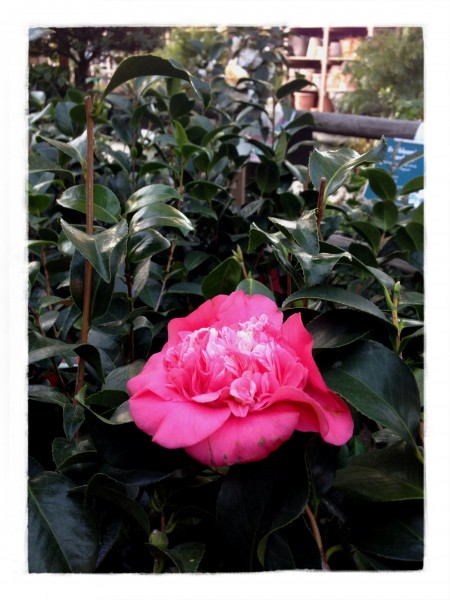
Camellias are in bloom and appear late winter in mild climates. Needing shade and moist conditions they can be found in a multitude of colors and shapes. From double blossoms to single petals, the choice is yours.
I couldn’t resist to throw my “Valencia” orange tree in this grouping, because of it’s magnificent color it provides in the garden.
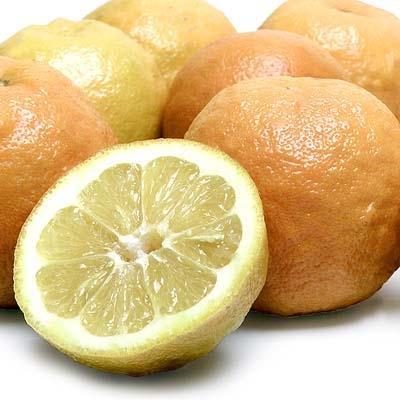
Seville Orange curd is one of my splurges, when I’m involved in an adventurous baking day at home. Everything goes with the popular lemon curd, so I decided to try a new recipe with Seville Oranges, which I kindly received from from Melissa’s Produce. Seville oranges come under the heading of Bitter oranges, which are too sour and astringent to eat raw. Instead, they are cooked in preparations such as marmalade and preserves, but also valued for their bitter peel which is often candied, and for their essential oils which are used to flavor foods as well as special liqueurs. I know what you’re thinking this is a totally English post, but that’s why I love curd of any kind, we don’t have it in the Greek Diet! Oranges are so common in everyday Greek cooking, and this scone combination with curd is so perfect for a tea with girlfriends or for a morning treat!
Seville oranges, or Bitter Oranges are perfect in making marmalade.
Native to Southeast Asia, most citrus experts believe them to be (most likely) a cross between a pomelo and a mandarin orange.
What makes Sevilles so special? Because Seville Oranges have a higher amount of pectin than regular sweet oranges, and therefore giving a better set and a higher yield, they are prized for making the best orange marmalade!
The sweet-sour tang of the Seville orange sets this curd apart from all others. Serve with these freshly baked scones for an afternoon tea with friends. Use oranges or lemons in place of Seville's for a perfect curd.
Course
Breakfast or Afternoon Tea
Cuisine
California Greek
Keyword
orange curd, scones, seville oranges
Servings12
AuthorMary Papoulias-Platis
Ingredients
Curd
1/2cupunsalted butter
3/4cupsugar
1/2cupfresh Seville orange juice, or any orange
3tablespoonsfinely grated orange zest
Pinchof salt
6large egg yolks
Scones
3cupsflour
1tablespoonbaking powder
1teaspoonbaking soda
1teaspoonsalt
1/2cupsugar
3/4cupcold butter, cut into 1/4 inch cubes
1cupbuttermilk
1/2cupraisins or walnuts
1tablespoonorange zest
1/2cuporange juice
1/4cuporange juice for topping
1tablespoonsugar for topping
Instructions
Curd
Melt the butter in a heavy saucepan over medium-low heat.
Remove the pan from the heat and whisk in the sugar, orange juice, orange zest and salt. Whisk in the yolks until smooth.
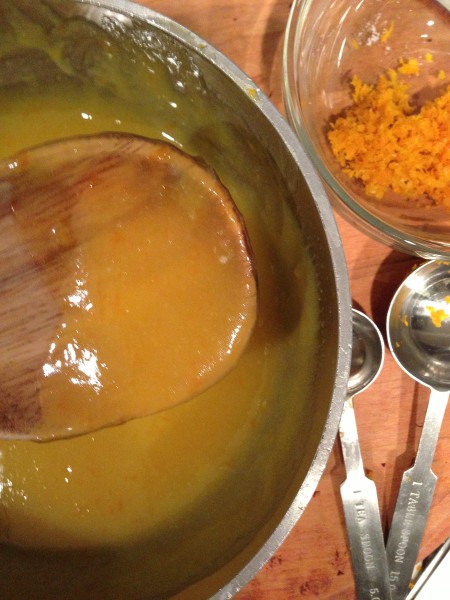
Cook the mixture whisking often (do not let boil) until it thickens and leaves a path on the back of a wooden spoon when a finger is drawn across it.
Pour the orange curd through a strainer into a bowl. Let cool. Refrigerate covered until ready to serve. Makes 1 1/2 cups
Scones
Heat oven to 400 degrees.
Sift all the dry ingredients in a large bowl. Cut in the cold butter with two knives, or use hands to mix. Stir in raisins, orange juice, and zest.
Make a well in the center of the bowl and add buttermilk. Mix with a spoon until combined. Do not overmix.
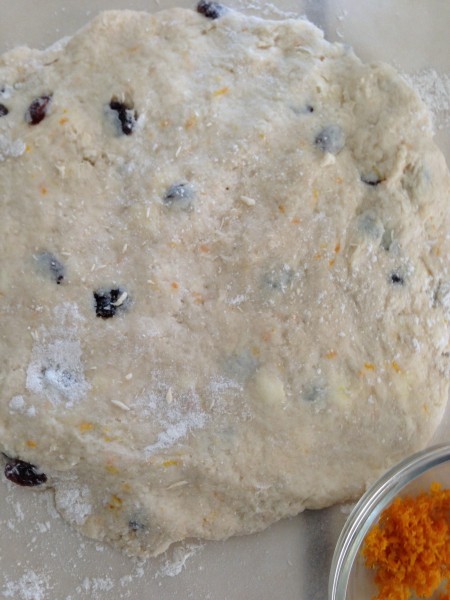
With floured hands, on a floured surface pat into a circle 3/4 inch thick. Cut into triangles or use a cookie cutter.
Place on a greased sheet pan or parchment paper. Brush each scone with orange juice and sprinkle with sugar.
Bake for 14-18 minutes. Serve warm.
Recipe Notes
Seville oranges, tangerines, or any orange can be substituted in this recipe. Tip: The original recipe calls for 12 sugar cubes dipped in orange juice and pressed into each scone before baking. This makes a delicious scone if served alone.
When making the curd stir continually, and do not bring to a boil or the eggs will cook. Quickest method for knowing the curd is ready: take the back of a wooden spoon , dip it in the curd and run your finger across the back of the spoon and if it stays it’s ready!
When ready to form dough, flour hands and pat onto a floured wax or parchment sheet to form a large circle.
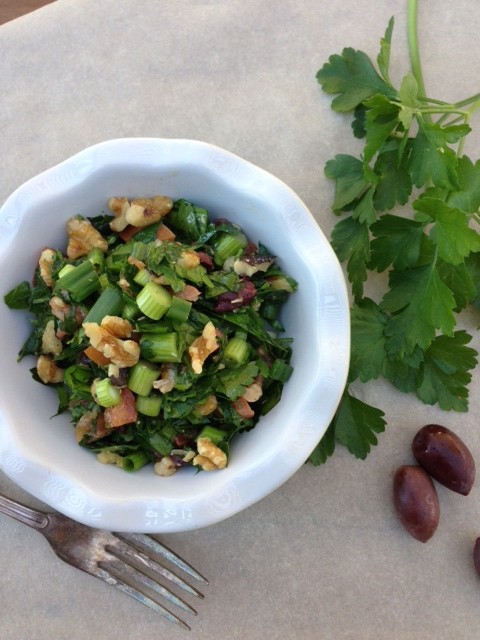
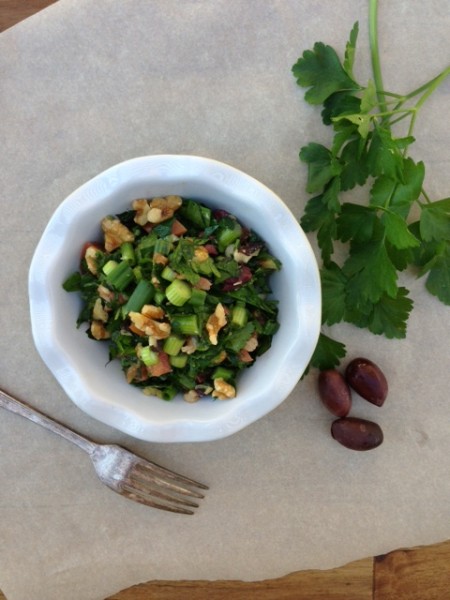
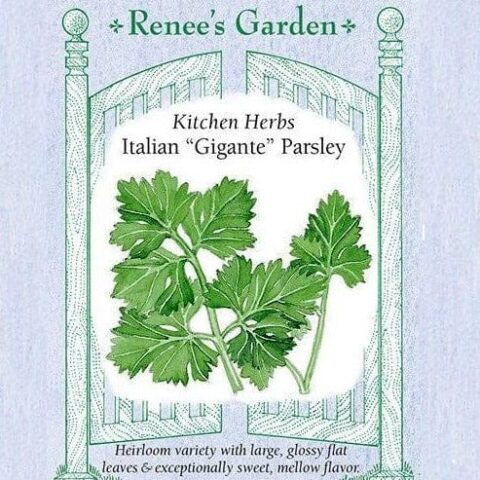
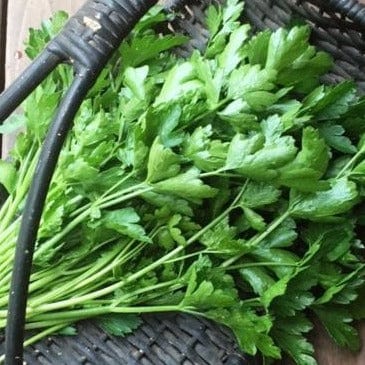
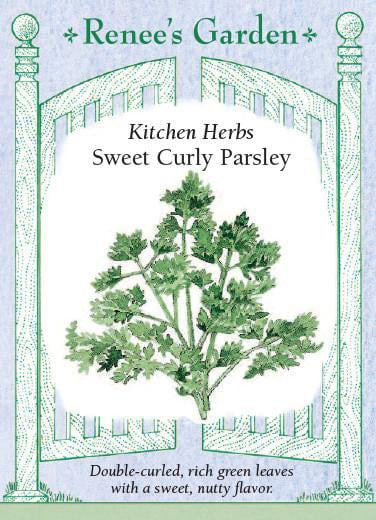
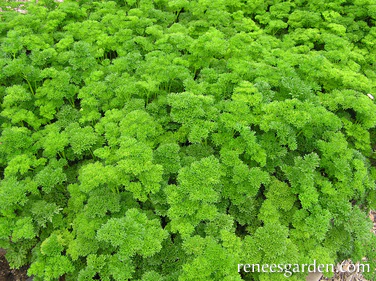
This year I decided to plant parsley as a winter crop and it worked! To my amazement it did beautifully and is still growing profusely – so here’s a quick and easy Greek Parsley salad, served best chilled or soon after you assemble it. Parsley is very a common herb used in Greek recipes and comes in as a close tie to oregano. It has many health benefits and at times it’s overlooked. When it comes to the nutritional value, parsley contains an excellent source of vitamin A and C. There are more than 30 varieties of this herb including the most available to us, the curly parsley and Italian flat-leaf parsley. I prefer the Italian for it’s more rich flavor, but either one will do. Parsley stems and leaves are used in dishes such as soups and salads, just make sure you finely chop the stems because they can be a little tough at times. Bundled together with other spices often called ” bouquet garni” in French (parsley tied together with a bay leaf and thyme) it can add a peppery fresh-grassy taste to any of your soups and stews.
In Greek History, parsley wreaths were made as a ceremonial act and placed as a remembrance on graves of loved ones. Today, Kolyva is passed out at funerals as a small bite to honor the deceased with the food of life.
Such a quick and easy salad that can be made for four or a large crowd, served chilled. Refreshing for an outdoor picnic or party.
Course
Salad
Cuisine
California Greek
Keyword
Greek, parsley, salad
Servings8
AuthorMary Papoulias-Platis
Ingredients
2bunches fresh parsley
1cuppitted kalamata olives
1cupwalnuts
1bunch green onions, coarsely, chopped
2large tomatoes, peeled and seeded
1/3cupextra virgin olive oil
1/3cupred wine vinegar
1/2teaspoonsalt
1/4teaspoonpepper
Instructions
Wash and dry parsley, remove the thick stems, and finely chop. Place in a large bowl.
Seed and chop the olives and tomatoes. Add to the parsley.
Chop the walnuts and add to the salad.
Chop the green onions and add to the salad.
Add the olive oil, red wine vinegar, salt and pepper.
Taste for seasoning, salt and pepper.
Serve immediately, or chill and serve later.
I prefer flat-leaf parsley than the curly variety, because it has a more potent flavor. I do use the stems in all my dishes, just make sure that you chop them finely. Both work in all recipes. I but my parsley from Renee’s Garden for their exceptional quality.
I hope you try and grow your own parsley, and make this deliciously fresh
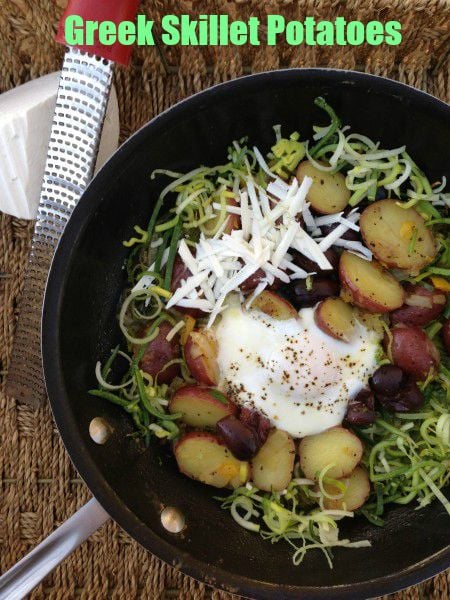
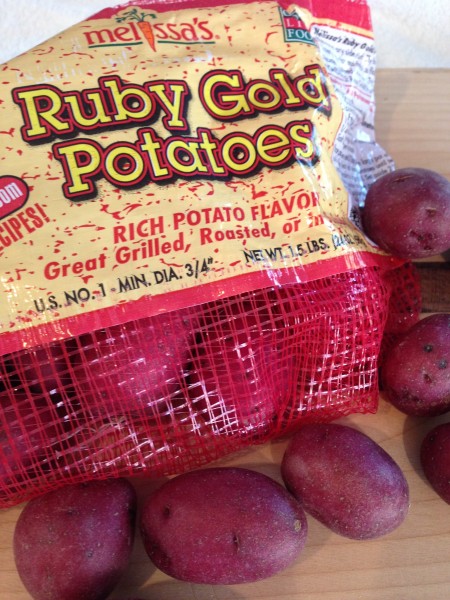
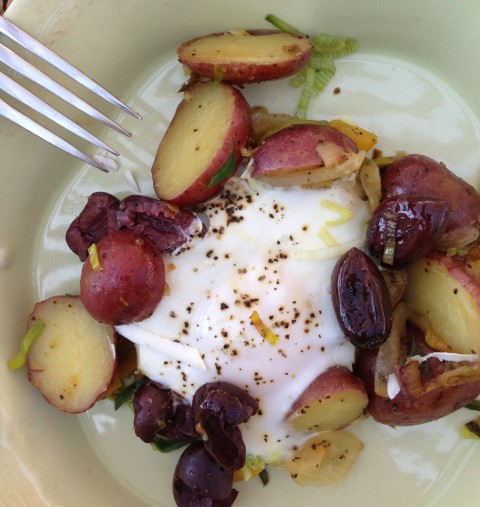
Skillet potatoes are my favorite when it comes to a home-styled breakfast for my family. The boys often need a heavy but healthy meal to get their day started, so this is my go-to breakfast starter for them. Baby Ruby Gold potatoes will save you time as they cook up quickly in the skillet along with the pre-sliced and washed leeks. Adding an egg or two provides them the protein they need to start their day. Greek olives are always in my refrigerator which was added for their saltiness. With a touch of white Mythira Greek cheese, it adds a balance to the dish. You can use any hard cheese as a substitute for this recipe, but after all this is a Greek Blog.
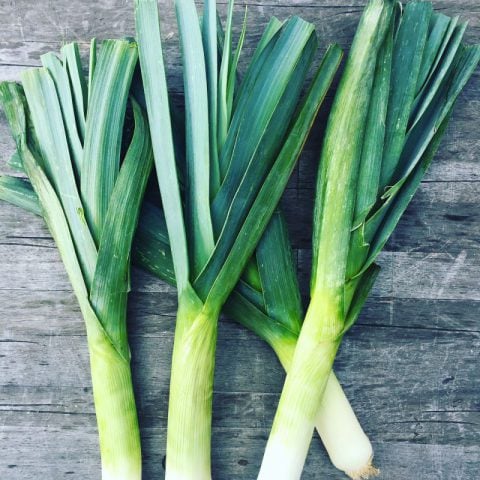
The skillet potatoes can be served for breakfast or brunch. Both vegetables were sent to me from Melissa’s Produce. If you’re looking for Mediterranean produce, they offer many varieties of vegetables and fruit. Thank-you Melissa’s for excellent quality and tasty fresh produce.
At the supermarket, I look for long slim leeks, with a long white bottom end. Try growing them in your garden, they have an incredible strong but sweet flavor.
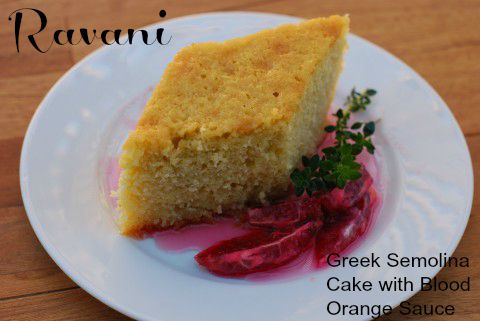
Drenched in a syrup, this rich semolina cake is often made in our family for special occasions and enjoyed as a celebratory dessert. I prefer semolina when making Ravani, traditionally made with farina. The texture is slightly smoother with semolina and it’s readily available in your natural or ethnic supermarkets. I used Bob’s Red Mill brand for this recipe, but any semolina can be substituted. I chose to add seasonal blood oranges to the dish to give it a lovely sweet-sour combination, which I love in desserts. But, you can substitute any orange for this recipe. The blood orange with it’s unique color has a deep-purplish-red blush skin. The flesh is often streaked in a deep crimson shade. They are usually small to medium in size and easy to peel. Their flavor is a sweet-sour with a hint of raspberry and often seedless. Melisssa’s Produce was kind enough to send me these beautiful blood oranges, a seasonal fruit we are so fortunate to enjoy in California.
"Ravani" Greek Semolina Cake with Blood Orange Sauce
A traditional cake made with semolina and the delicious addition of blood oranges and sauce.You can use any citrus to your liking, try cranberries or cherries during the holidays.
Course
Dessert
Cuisine
California Greek
Keyword
blood oranges, cake, ravani, semolina
Servings10
AuthorMary Papoulias-Platis
Ingredients
Cake
1/2poundsweet butter, room temperature
1cupsugar
6eggs
1cupsifted flour
1tablespoonsdouble-acting baking powder
3/4cupsemolina
Syrup
2cupssugar
2cupswater
juice and rind of one blood orange
2-3cinnamon sticks
6-8whole cloves
1teaspoonvanilla
Blood Orange Syrup
1cupsugar
1cupwater
juice of 2 blood oranges
2-3sprigs fresh lemon-thyme, optional or basiloptional or substitute basil
1stick cinnamon
Instructions
Preheat oven to 350 degrees.
Butter a 8x8 baking pan and set aside.
In a large mixing bowl, beat the butter with an electric mixer until fluffy. Slowly add the sugar, continuing to beat.
Add eggs, one at a time, beating well but at low speed after each addition.
Sift flour and baking powder together, then add to the mixture.
Add semolina slowly and mix well until batter is fairly thick.
Spread batter evenly into a greased square 8x8 inch cake pan.
Bake for 40-45 minutes.
Remove from the oven and keep cake in pan.
Syrup
While cake is baking, prepare syrup.
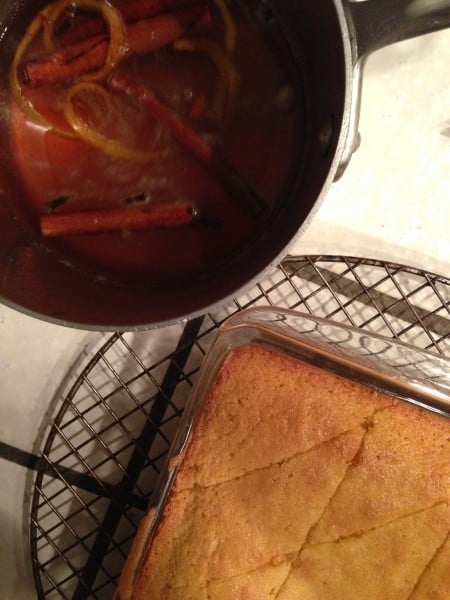
In a saucepan, combine sugar, water, vanilla, cinnamon, juice, rind, and cloves.
Bring to a boil and simmer for around 30 minutes, or until slightly thickened. Strain syrup into small bowl.
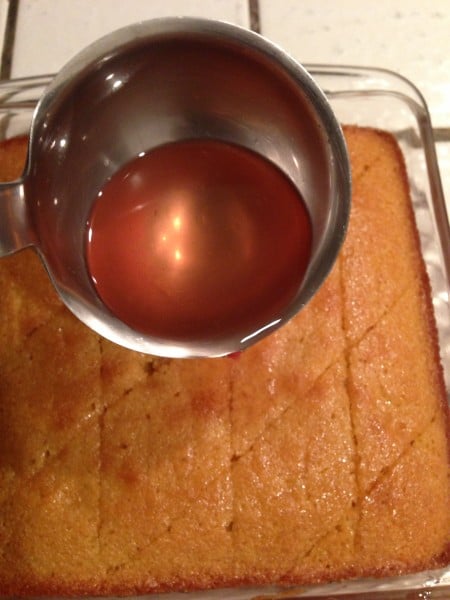
Once cake is done, cut into desired pieces, and ladle hot syrup over hot cake. (Keep cake in pan)
Cover and let cool before serving.
Blood Orange Syrup
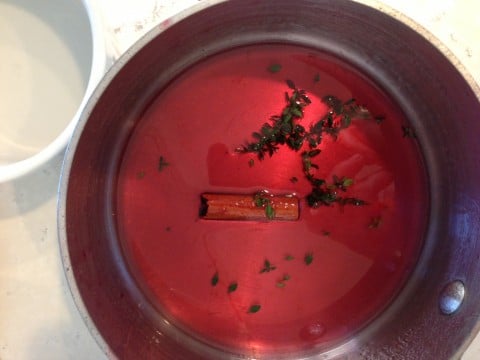
Place sugar and water in a small saucepan. Add cinnamon stick and juice.
Bring to a boil, reduce heat to low and simmer, stirring until thickened, about 15 minutes.
Remove from heat and add thyme and set aside. Strain sauce before serving.
Plate
Prepare orange slices.
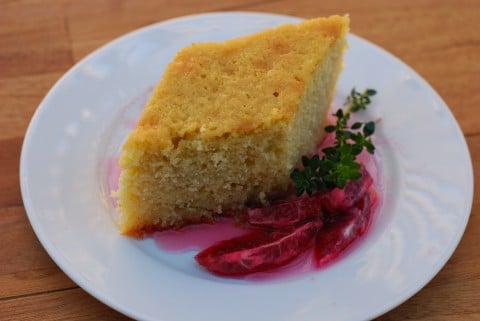
Place cake on a dessert plate, add blood orange syrup, and serve.
When out of the oven cut the cake while warm.
I enjoy cutting this cake into diamonds for a beautiful presentation which yields 11 pieces.
You will get more pieces cutting the cake 4×4 for 16 pieces.
Have the syrup warm and ready for the cake. The beautiful red color comes from the blood orange rind and juice.
Strain the syrup and add to the cake. Cool and serve with the Blood Orange Sauce.
Blood Orange Sauce
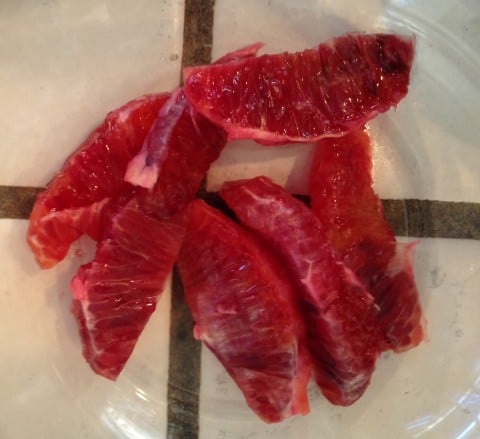
The blood orange has a thick skin so I removed the flesh to make them easier to eat and for a nicer presentation. To do this: Peel the orange from top to bottom, carefully cutting beyond the pith to expose the flesh. Over a bowl, to catch all drippings, hold the orange in your hand carefully cut between the membranes to reveal these beautiful segments.
The simple syrup was simmered with a cinnamon stick, and lemon-thyme for a more winter flavor. The flavorings can be changed to your liking. Adding the blood orange juice gives this syrup a rich and unique flavoring.
This is my twist on a very traditional Greek cake,
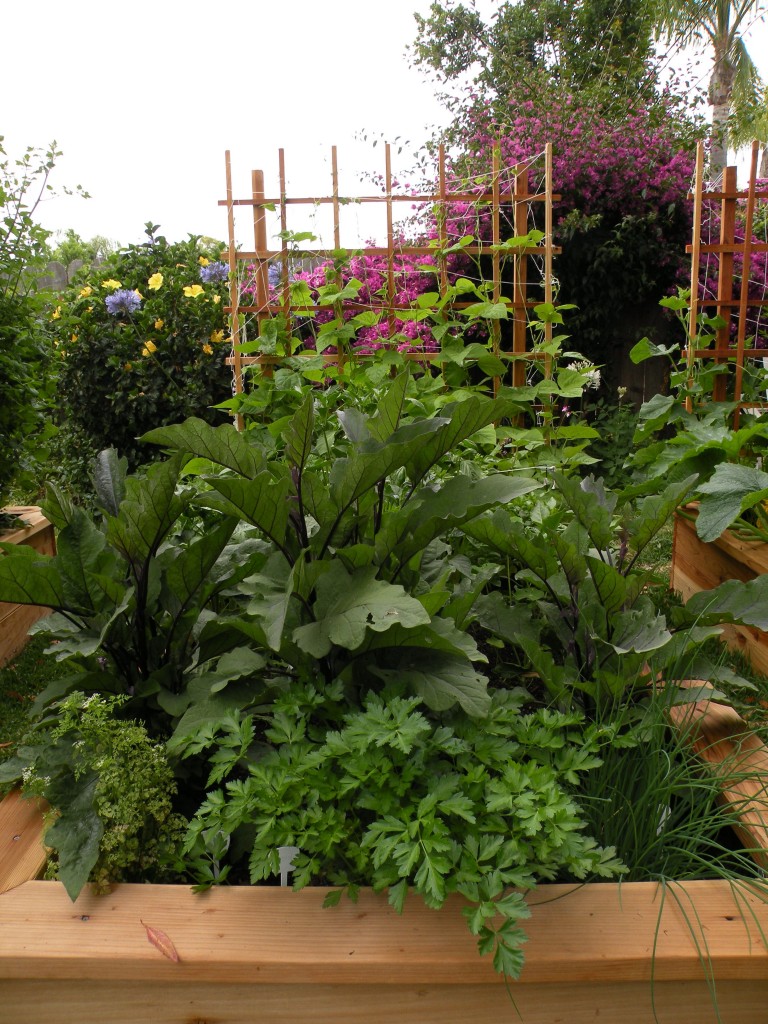
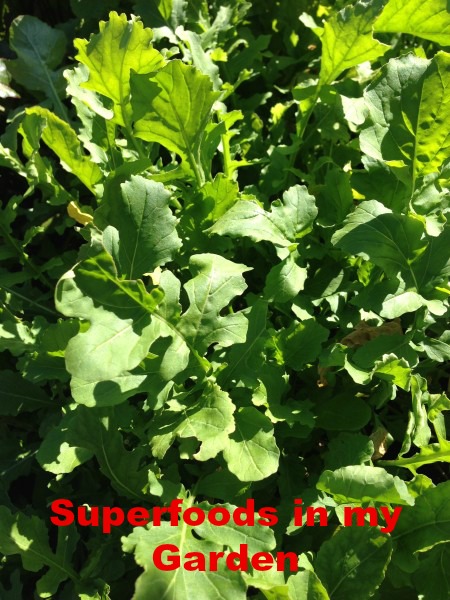
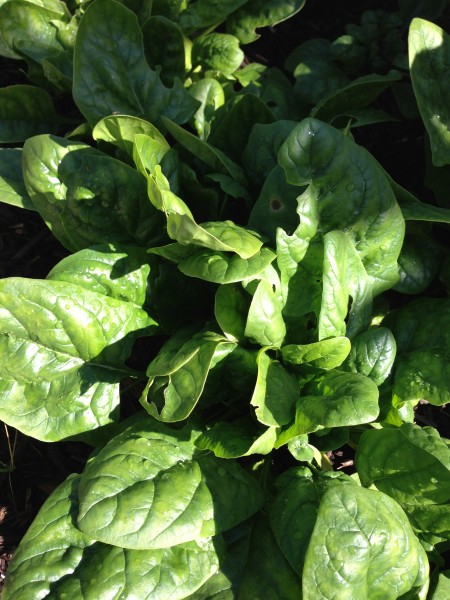
Every winter season I plan on adding various Greek Powerfoods and Greens to my new garden layout, keeping in mind what plants I would like to eat and cook for my family and my blog. I do take notes on what does well in my area, and I actually have changed the way I plant. I carefully select a few of my favorites and plant more of them. Over planting is something I have learned not to do and have decided it’s not the route I want to take. My transition from my dry-dead summer garden to my winter one is always in the month of September and planting in early October.
Planting tips:
Growing what does best in your area is important, so I suggest you visit your local nurseries often to see what they have to offer.
Read local gardening articles and books to familiarize yourself with what is successful, to save money and plants that won’t work.
Plant only what you eat. You can get carried away with all those beautiful vegetables at the garden store.
Most importantly, ask your garden friends what they plant and are successful with in their garden.
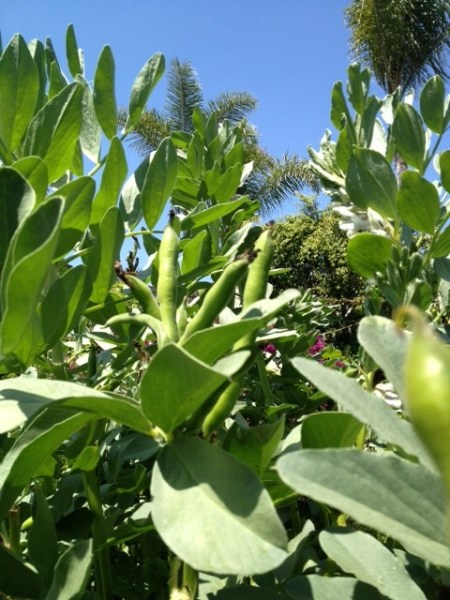
In the picture above are my Fava beans growing in my larger planter box, but they are not quite ready.
A Greek kitchen is never without Fava beans.
Nutritional Value of the Fava Bean : One cup contains 13 grams of protein
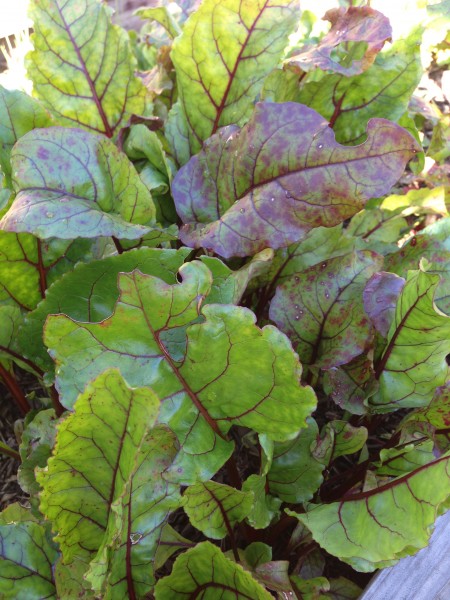
What garden would be complete without beets! This year I bought seeds on a strip (which I never do) and it has been very successful.
As I’m writing this post they’re not ready to pick…but don’t forget to eat the greens.
Nutritional value of Beets: contains Vitamin B,C, A and folate – loaded with the mineral Maganese (14% in 1/2 cup) for good brain health.
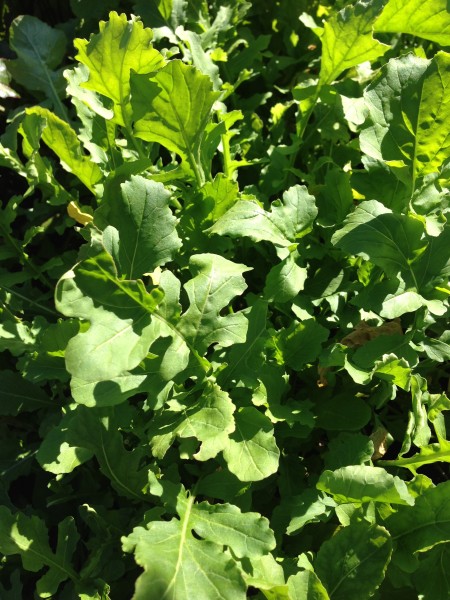
Arugula is always in my garden for it’s health benefits and peppery taste for all my daily fresh salads.
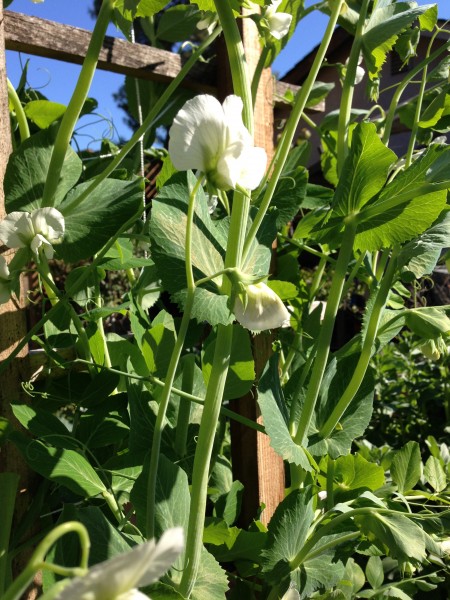
My Sugar Snap peas are just flowering and can be found growing on a tall trellis every season in my boxes. This variety is super-sized and can be eaten fresh or cooked.
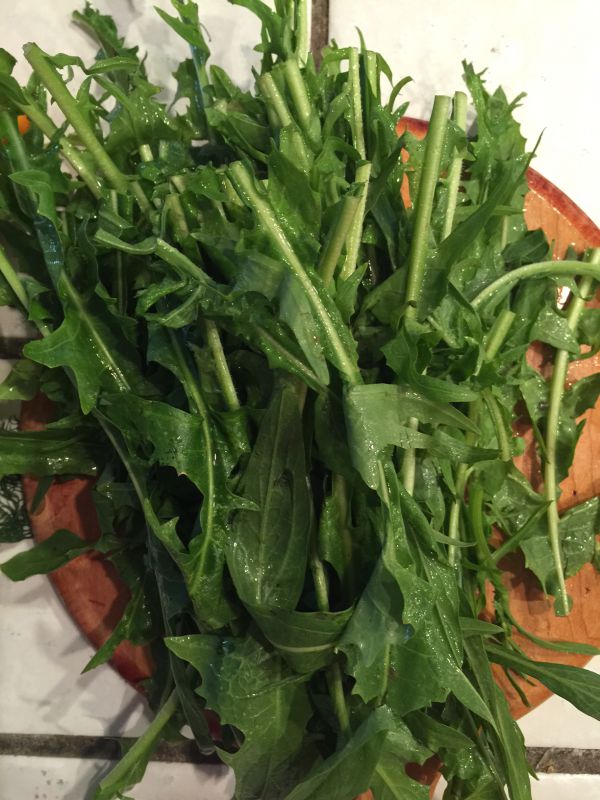
Mustard greens have a spicy-hot taste that can be included in soups, stews, and grain salads for an added punch. Or just steam-them with a splash of lemon juice.
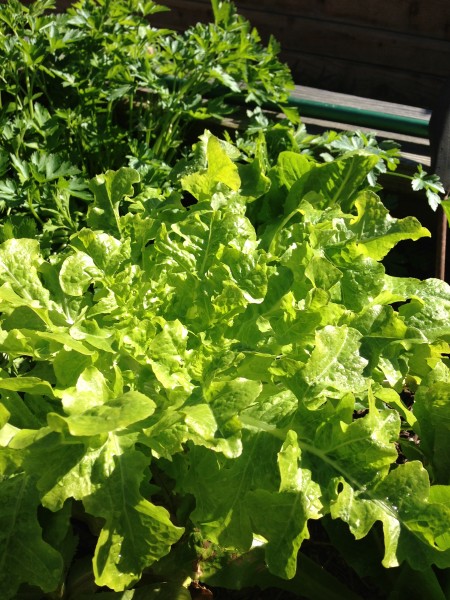
In one box I have planted all my herbs and lettuces. This is a new experiment because I cook so often I’m always needing fresh herbs for all my dishes. And once you plant a fresh lettuce garden there’s no stopping you because the lettuce is so sweet and delicious, it’s like no other. Don’t forget to plant all the Fall herbs such as: savory, oregano, marjoram, parsley, thyme, and rosemary.
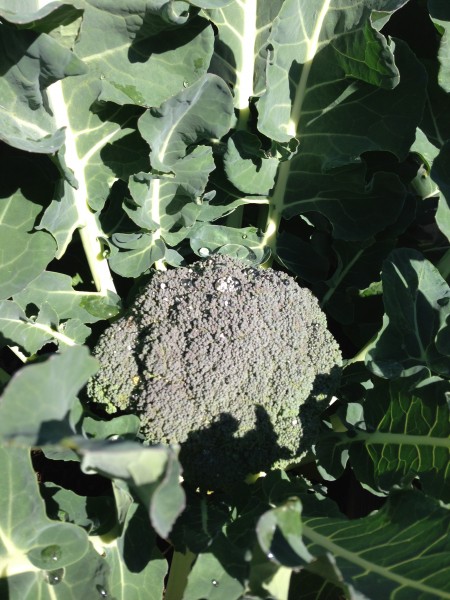
If I had a large field to garden with, I would plant all broccoli. This plant is so easy to grow besides being so beautiful to look at. It can easily go into your front yard design and be admired by all your neighbors. I have steamed it, added it to my soups, stews, and ate it fresh in my dinner salads.
Nutritional Value: Broccoli has 11 grams of protein (present in 100-calorie portions)
I hope this will inspire you to begin a garden this year and plant greens for your recipes and good health!
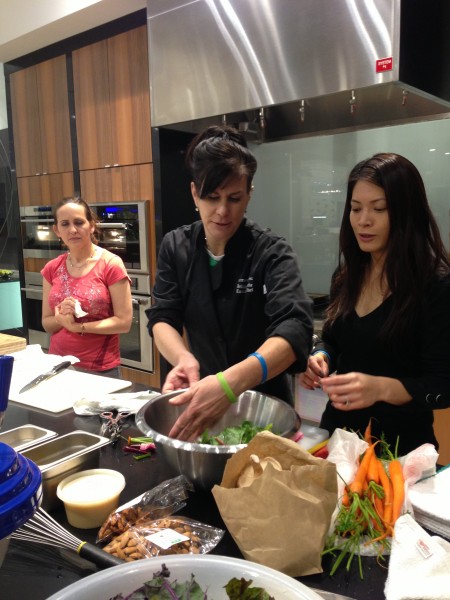
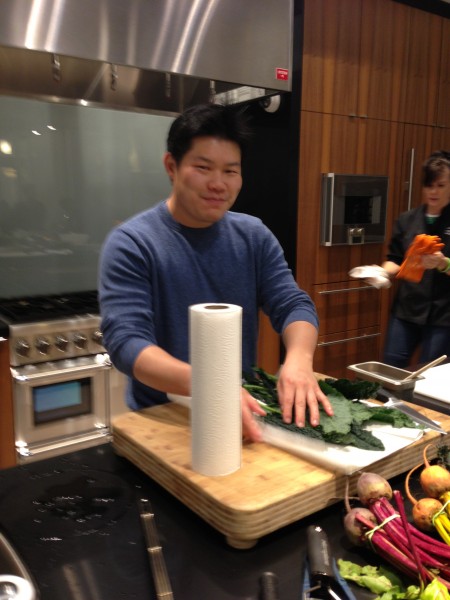
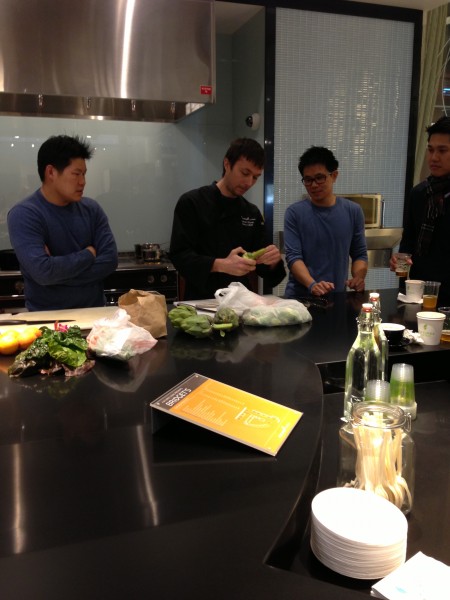
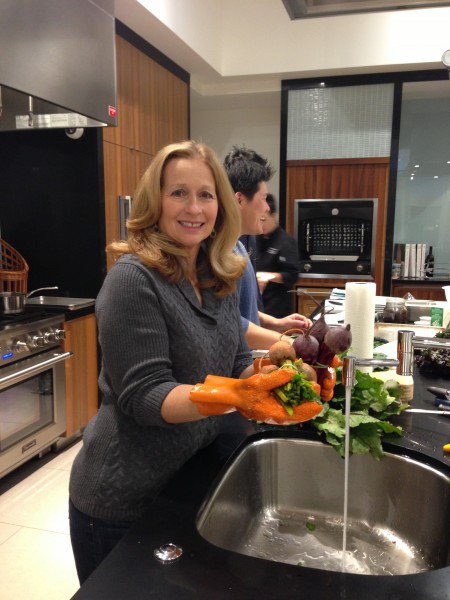
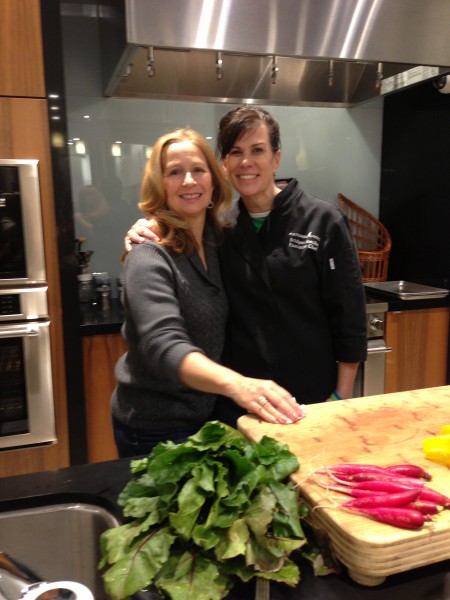
You can find Chef Bridget Bueche heading any of her three culinary kitchens at the several locations of Fixtures for Living. We had the opportunity to attend one of her special Market Tours and Fresh Produce cooking class last weekend in Orange County. We met up with Bridget and her Sous-Chef early in the morning just as the market opened. We took the farmer’s market tour where we selected the produce from the farmer’s booths and spent the morning in her kitchen steaming, and braising the vegetables we picked up earlier.
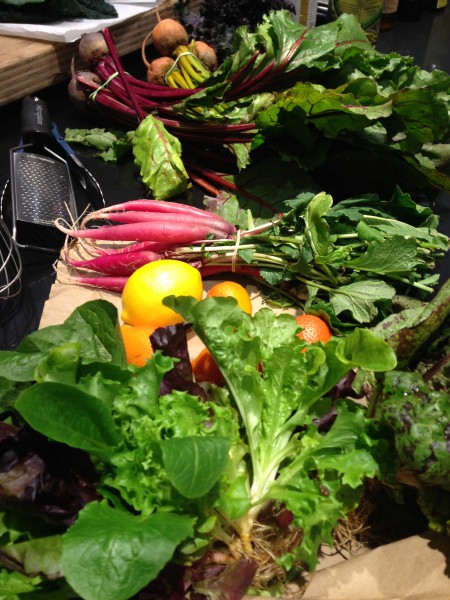
This is the beautiful array of vegetables and fruit we had to work with in creating today’s dishes.
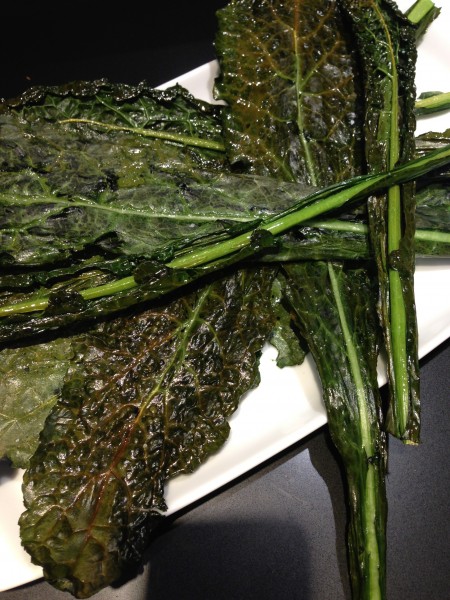
Preparing the greens for our tasty treat of krispy kale brushed with avocado oil and baked whole as is.
Delicious!
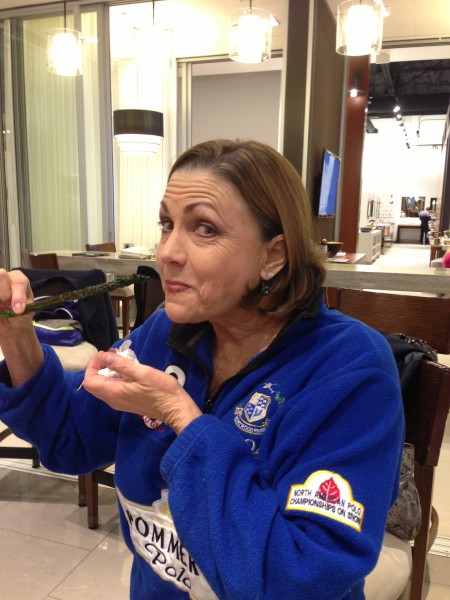
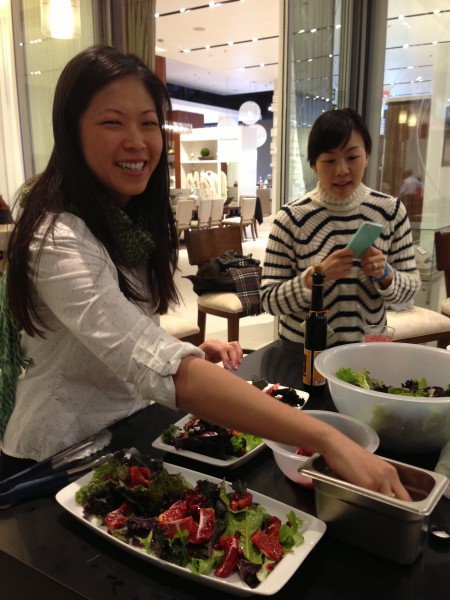
My guest Madeline from T.E.R.I. enjoying the kale.
This salad had everything you could possibly ask for, fresh farm lettuce with blood oranges, pomegranate, with a light and lovely lemon vinaigrette.
Instruction on cleaning artichokes by Bridget’s Sous-Chef.
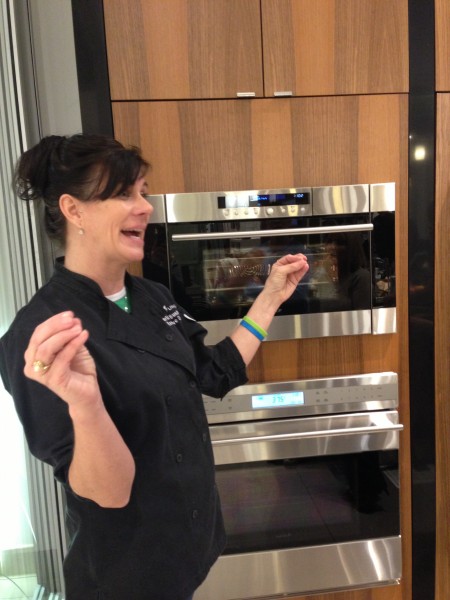
Bridget demonstrating the incredible steamer we all want to buy!
The beets were steamed to perfection.
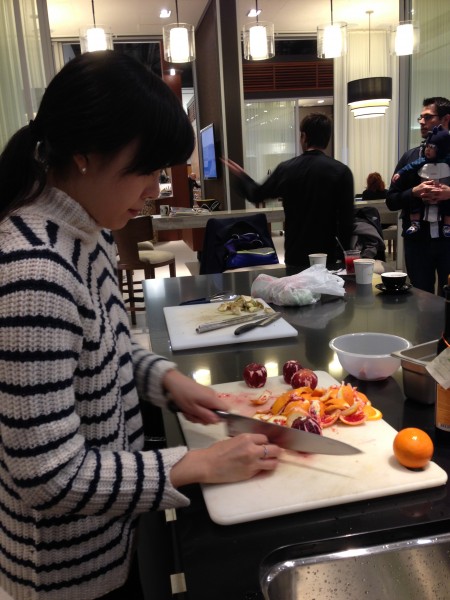
Blood oranges are in season, and Bridget taught us the skill of peeling into segments for the salad.
Sleeves up and gloves on- (haven’t seen those before), cleaning the amazing yellow and red beets from the farm stand.
What a lovely day spent with my dear friend Bridget in her incredible kitchen in Orange County where she performs her magic each and every time!
Thanks-you to Fixtures and Bridget for the wonderful experience.
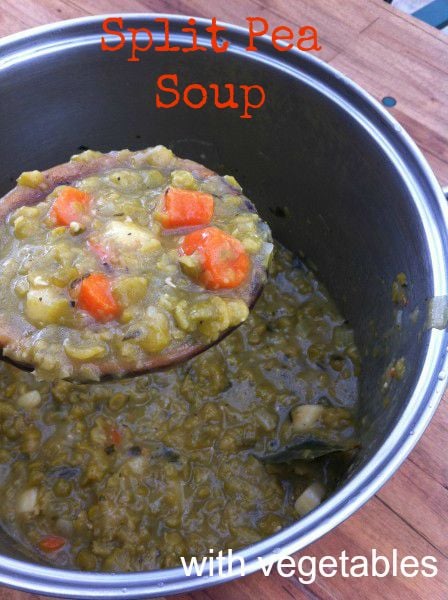
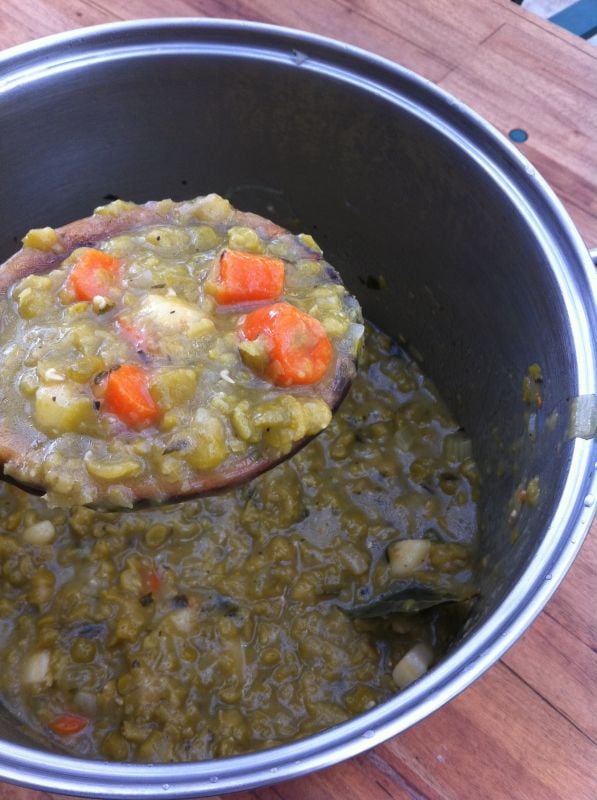
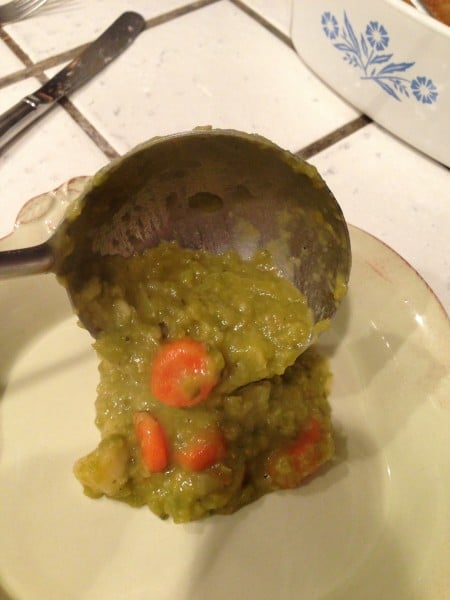
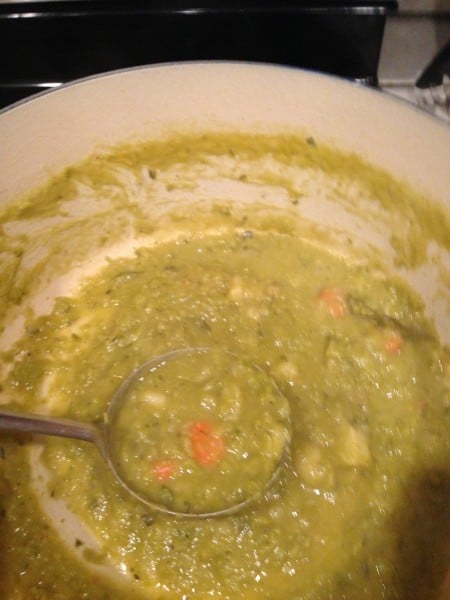
Traditional split pea soup is a heart-warming meal for you and your family. This recipe is made with a chock- full of vegetables, and I have been serving this soup for many years on my table. I adapted this recipe from Shelia Lukins’s End-of-the-Line Split Pea Soup, Simply Delicious-printed in Parade.
She calls for a ham bone, and as you know that imparts such a wonderful smokey flavor to the soup, and it makes the best split pea soup ever. I make my broth from the ham bone before making the soup. This allows me to control the saltiness that comes from the ham for my soup. But, you can also leave out the bone and substitute vegetable broth and have a vegetarian dish-just adjust the flavorings to your taste. I do love the sweetness the parsnips add to this recipe, so I encourage you to leave them in. And the tarragon brightens the flavors and adds the herbal fragrance it needs.
Soup Tips:
Soup can be made ahead, and it even tastes better the next day.
Left-over soup can be placed in the freezer and defrosted in individual or smaller portions.
A great use for your extra vegetables, just add into the soup and adjust the flavors.
Invest in a dutch oven with thick bottoms and sides, I use Le Creuset.
Use a blender to puree your soups, or a hand immersion blender for partly pureed soup.
Have two meals in one: bake a ham with potatoes or yams one night, and make this split-pea soup later in the week.
Try this fantastic split-pea soup with vegetables for a complete dinner for your family. Make two meals - Bake a ham one night, and use the bone for this soup! If you're in a hurry, use store-bought broth..
Course
Soup
Cuisine
American
Keyword
soup, split pea
Servings6
AuthorShelia-Lukins
Ingredients
Broth
1meaty ham bone or substitute a vegetable broth
1unpeeled carrot
1rib of celery
1/2onion one bay leaf
Soup
1poundof dried split-peas
4carrots - peeled and chopped
2ribs of celery, chopped
1onion, diced
2parsnips, peeled and chopped
2leeks, cleaned and chopped
2tablespoonsolive oil
1bay leaf
4sprigs of fresh thyme or 1 teaspoon dried
1teaspoondried tarragon
4cupsof ham, chicken or vegetable broth
4cupswater
salt and pepper
4tablespoonsparsley-chopped
Instructions
Broth
Regular soup only (Not Vegetarian)
Place the ham bone in a large pot, add 6 cups of cold water, bring to a boil and reduce the heat to a simmer.
Add 1/2 of an onion, 1 unpeeled carrot and cut in half, one celery stalk cut in half and one bay leaf.
Cook for an hour and strain the broth in a large bowl and reserve for the soup.
Keep any leftover meat from the bone for the soup.
Soup
Rinse the peas in cold water, pick over, for pebble, rinse ,drain and set aside.
Coarsely chop the carrots, celery, onion, parsnips and leeks.
Heat oil in a deep dutch oven pot, and add the vegetables.
Cook until wilted for 10-12 minutes.
Add the peas and cook and stir for 1 minute.
Add the bay leaf, thyme, tarragon, parsley, broth and water, vegetable or chicken broth.
Bring to a boil, reduce heat to a simmer, cover partially and cook, stirring often until the peas are cooked, about 45 minutes.
Remove the bay leaf and thyme sprigs.
Taste for salt and pepper and serve.
Note: You may need to add more water or broth if soup thickens.
Remembering back as a child in San Diego, on this day we would attend church for the Epiphany services then head down to the bay for the annual cross diving event.
Here, many of the young kids, mostly boys, would dive in the ocean once the priest threw the blessed cross into the very cold waters of January. Brrrrrrrr!
The person who retrieves the cross has good luck for the entire new year. The day is spent celebrating the holiday with traditional foods and breads with family and friends. The Saint Spyridon Greek Orthodox Church in San Diego, has an epiphany video of the diving of the cross from last year’s event shot by Greg Balourdas M.D.
The Greek Tradition
On the stroke of January 6th, the “twelve days” of Christmas officially come to an end. This day, takes on a special meaning in Greece. Here, there is a special ceremony of blessing the waters and of the vessels that ply them.
The modern observance at Piraeus, the ancient port of Athens, takes the form of a priest hurling a large crucifix into the waters. Young men brave the cold and compete to retrieve it. These days, the cross is generally attached to a nice, safe long chain, just in case that year’s crop of divers is something less than desired.
After the diving, local fishermen bring their boats to be blessed by the priest.
What does all this have to do with Christmas? Orthodox belief says that it was the day of the baptism of Jesus, and that this is where the day’s association with water arises.
Here’s a nice description of what this day means to many people and religions around the world from TimeandDate.com.
Importance of the Holiday!
Epiphany is commonly known as Twelfth Night, Twelfth Day, Three Kings’ Day, or the Feast of Epiphany. It means “manifestation” or “showing forth”. It is also called Theophany (“manifestation of God”), especially by Eastern Christians. Epiphany refers not only to the day itself but to the church season that follows it – a season that has a varied length because it ends when Lent begins, and this depends on the date of Easter.
It commemorates the first two occasions on which Jesus’ divinity, according to Christian belief, was manifested: when the three kings (also known as wise men or Magi) visited infant Jesus in Bethlehem, and when John the Baptist baptized him in the River Jordan. The Roman Catholic and Protestant churches emphasize the visit of the Magi when they celebrate the Epiphany. The Eastern Orthodox churches focus on Jesus’ baptism.
Epiphany is one of the oldest Christian feasts. It was celebrated since the end of the second century, before the Christmas holiday was established. Like other Christian seasons, the church appropriated Epiphany from an old pagan festival. As early as 1996 BCE, the Egyptians celebrated the winter solstice (which then occurred on January 6) with a tribute to Aeon, the Virgin. It is important to note that the holiday was established prior to the Gregorian calendar’s introduction.
What do people do?
January 6, which is 12 days after Christmas in the Gregorian calendar, marks not only the end of the Christmas holidays but also the start of the Carnival season, which climaxes with Mardi Gras. In some European countries, such as the Czech Republic and Slovakia, children dress as the three kings and visit houses. In their roles as the kings, or wise men, they sing about the Jesus’ birth and pay homage to the “king of kings”. They are rewarded with praise and cookies.
Dia de los Reyes Magos is the Latin American celebration of Epiphany. In many Latin American countries, it is the three wise men and not Santa Claus who bring gifts for children. Children write letters to the wise men telling them how good they were and what gifts they want. In France Le Jour des Rois (the Day of Kings), sometimes called the Fête des Rois, is celebrated with parties for children and adults. The galette des rois, or “cake of kings”, highlights these celebrations. This cake is round and flat, cut into the pantry, covered with a white napkin and carried into a dining room.
Children in Spain fill their shoes with straw or grain for the three kings’ horses to eat and place them on balconies or by the front door on Epiphany Eve. The next day they find cookies, sweets or gifts in their place. The “three kings” make an entry in many cities in Spain on Epiphany Eve, accompanied by military bands and drummers in medieval dress.
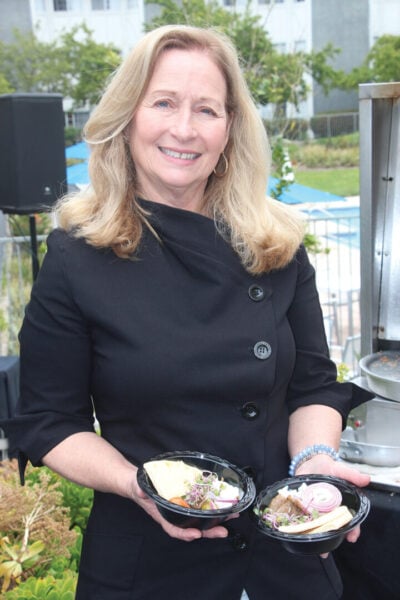
Hello from California Greek Girl. I’m the owner of Ethos Culinary located in the beautiful city of Carlsbad. Join me as we explore California’s bounty of foods, farmlands, and culinary experts. I’m looking forward to bringing you Greek, Mediterranean and Plant-Forward Cuisines. OPA!
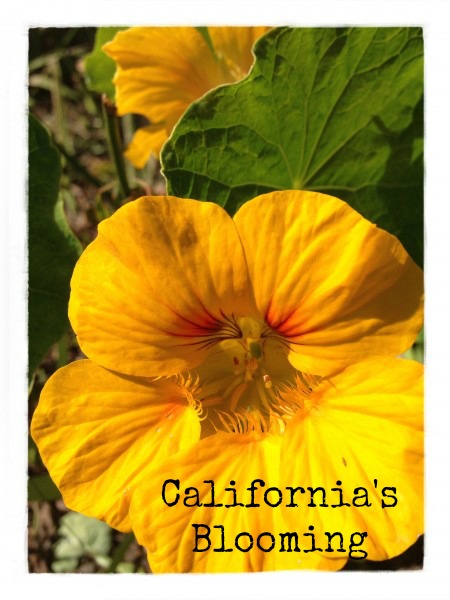 January and February are cold and wet months in your garden and often a time for cleaning up, weeding, and pruning. But first to peek out in early Spring are the beautiful sunny faces of the trailing”Nasturtium” blossoms. A fast creeping herbal flower with petals 2-3 inches round, and multiple colors to choose from.
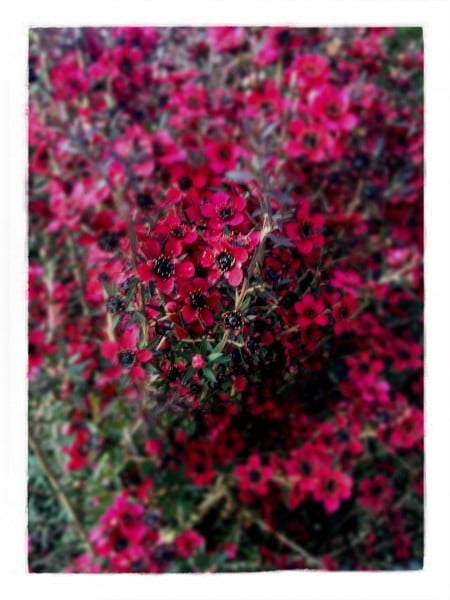 Fiery red blossoms flowing down the hard tough woody branches of the “Leptospermum, “Red Damask”, makes a grand entrance in your flower garden. A perfect cutting flower for your spring floral arrangements, it can also be purchased in white and pink.


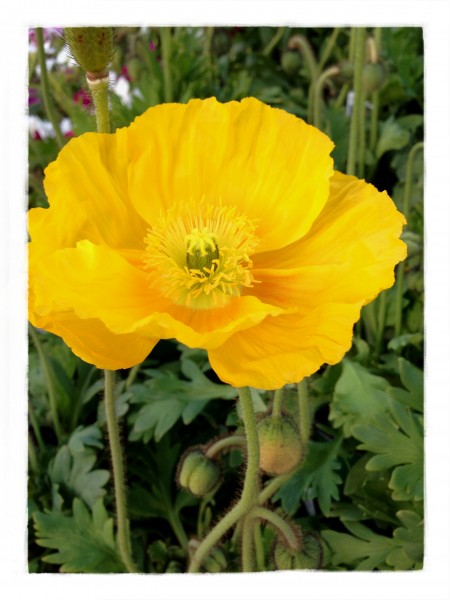 The “California Poppy” found on side streets and hillsides in California growing wild is one of the most popular flowers to place in garden pots or borders in the coastal communities. Select from many bright shades and plant in clusters to brighten any dull spot in your landscape.
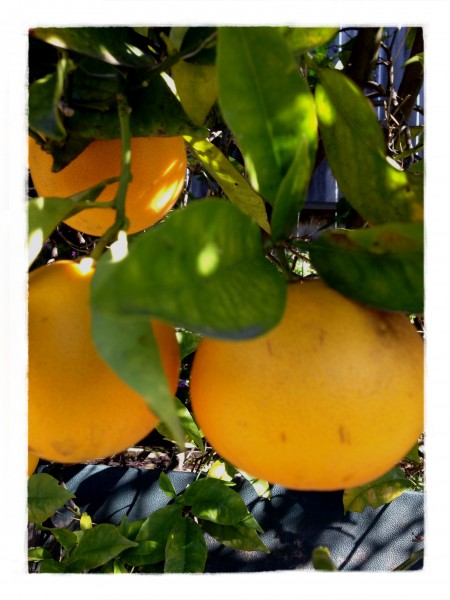 I couldn’t resist to throw my “Valencia” orange tree in this grouping, because of it’s magnificent color it provides in the garden.













 Hello from California Greek Girl. I’m the owner of Ethos Culinary located in the beautiful city of Carlsbad. Join me as we explore California’s bounty of foods, farmlands, and culinary experts. I’m looking forward to bringing you Greek, Mediterranean and Plant-Forward Cuisines. OPA!