I recently had the pleasure of working on an article for Whole Foods Magazine on Olive Oil and the health benefits of cooking with oil.  I currently use Bragg’s Organic Extra Virgin Oil in my recipes and at the cooking school where I teach. Olive oil has been in the media due to the large study UC Davis conducted back in 2012. This article was just published for Whole Foods Magazine and written by Tim Person. Whole Foods Magazine informs and educates the Natural Product Retailers with a monthly magazine. This article appears in their February 2012 issue.

Healthy Fun with Cooking Oil!

Bringing natural cooking oils home is a win/win for consumer palates and consumer health.

Written By:
Tim Person

View more articles in:

  • share

Today, everyone is a chef, as consumers go to grocery stores in droves looking for cooking oils to add to their home concoctions, be they salads or sizzling sauté dishes. You should be ready to guide them toward oils that not only taste good and are versatile in the kitchen, but also represent a step in the right direction for a healthy diet.

Getting Creative in the Kitchen
In her cooking classes centered on the use of olive oil, Mary Platis likes to tell her students, first and foremost, to become familiar with the taste of this ingredient. A Greek chef, she is a consultant on an organic extra-virgin olive oil product sourced from Greece and offered by Bragg Live Food Products, Santa Barbara, CA. Platis explains that a cooking oil has to fit the food you’re cooking it with, and that olive oil happens to be a perfect match for all of the food found in the popular Mediterranean diet.

She also instructs people on how to look at olive oil labels when they’re at the store. She says to look for unrefined, pure olive oil as detailed on the label to find the best products. USDA and IOOC (International Olive Oil Council) certified organic olive oil from Greece is one example of quality that she cites, while others may be familiar with the famous “Made In Italy” designation of other extra-virgin oils. Including sharing her Greek food heritage on her blog at www.californiagreekgirl.com, Platis is an all-around advocate for olive oil in the home kitchen because of its wide array of applications as well as its stellar health profile.

In her classes, she takes students through the process of sautéing with olive oil (don’t use high heat, because it can strip olive oil of its health benefits), roasting with it and using it as an ingredient in sauces and marinades. At the end of a given recipe, she’ll use the oil to further enhance the dish: drizzling olive oil on a soup, over a finished pizza or over an ice cream dish that is already infused with olive oil to enhance the flavor.

Importantly, Platis encourages home cooks to utilize olive oil in place of butter when they can. Keeping in mind that olive oil, like all oils, is characterized by its fat content (one tablespoon, Platis says, equates to about 120 calories), the practice of using it as a butter replacement can improve the health profile of meals without sacrificing taste. “It has this robust flavor, peppery…it gives you that zing at the end in your throat,” Platis says.

Extra-virgin olive oil is also good for drizzling on pasta and vegetables, she says. “When you marinate with olive oil, it penetrates the first few layers of the food. So, it does give it that buttery, peppery feeling that you want for your meats or chicken,” she adds. In general, adding it as a finishing touch enhances the flavors inherent in the food, especially of the Mediterranean variety. Platis goes on to cite further applications: using it as an ingredient in hummus, in various desserts, in Greek and herbal salad dressings, as a bread dip and in making savory breads. All are useful ideas, and excitingly, they do not exhaust the culinary potential of olive oil as an ingredient.

Mary Ann Siciliano, national sales manager of Arista Industries, Inc., Wilton, CT, reels off many of the other home cooking oils and their typical uses as she sees them. “Some of the specialty oils, like avocado, brazil nut, grape seed, hazelnut, macadamia and rice bran are used on salads, whereas the less expensive oils, like canola, corn, olive, safflower, sunflower and soy are used for baking and frying.”

Coconut oil, also, should not go unmentioned, as it surges in popularity as a cooking ingredient in the United States. “The high smoke point of coconut oil makes it ideal for browning meats and sautéing vegetables. Coconut oil also makes a light, flaky pie crust, and is a great vegan butter alternative in all baked goods,” says Erin Meagher, founder of Kelapo Coconut Oil, Tampa, FL. Though it has not enjoyed the reputation for long, many consumers look at it today as more than a tropical novelty. “We always say that organic coconut oil is perfect for all dishes from savory to sweet. The flavor of coconut oil is extremely versatile,” Meagher says. Its reputation from a health perspective, as we’ll see, is in the process of rehabilitation, too.

Austrian pumpkin oil has an extensive history of consumption for its health benefits. Derived from the roasted seeds of the Styrian pumpkin variety (curcubita pepo var. styriaca), it can be used in desserts or on salads. Cooking with it, however, will strip it of some of the nutrients that lend it a strong reputation for healthfulness.

Not all desire it in every culinary context, but for those that would like their cooking oil to become an integral part of the flavor of a dish, the key is to keep things unrefined, according to Hillary Kallaway, training manager for Spectrum Organic Products, Petaluma, CA. Consumers should select an unrefined olive, coconut, sesame or peanut oil, she argues, in order to bring taste to the forefront. “Unrefined oils retain their natural flavors and are best used at lower heats. They can also be drizzled over the finished dish for added flavor,” she says.

As awareness of the healthy oil offerings available to U.S. consumers grows, there is an opportunity for an already robust market to flourish. Says TJ McIntyre, vice president and general manager of Earth Balance, Longmont, CO, “If healthy oils are able to replace butter and still deliver on taste and performance in cooking and baking, there is not only an opportunity to highlight a very relevant difference from a saturated fat perspective, but there are allergy avoidance (lactose allergy and intolerance, casein allergy and avoidance) and ethical driven avoidance (vegans) issues that are a bona fide market opportunity for retailers.”

Better For You
In some cases, it’s a matter of selecting an oil that is natural over others that are synthetic and unhealthy. Or, we may focus on inherent differences in the healthfulness of an oil’s nutritive content. But any comparison of the health benefits of one oil with those of another usually begins with their respective fat profiles. “The problem with the American diet is it’s very high in saturated fat. Of course, we know that a diet high in saturated fat promotes increased cholesterol and increases risk of heart disease,” says John Westerdahl, Ph.D., R.D., director of health science for Bragg Live Food Products, and host of the national radio program Health & Longevity (www.HealthAndLongevityRadio.com). These saturated fats are ingested primarily in the form of animal products, dairy and hydrogenated fat in processed food.

Organic extra-virgin olive oil, Westerdahl says, is optimal for replacing these other types of fats, mostly due to its monounsaturated fat content. People following the Mediterranean diet often eat similar amounts of total fat as other cultures that suffer more from obesity and disease. But, he points out, the type of fat consumed differs greatly. Westerdahl adds that polyunsaturated fats may also need to be avoided in large quantities. They have been linked to the production of carcinogenic compounds and an increased risk of cancer, he says, neither of which is the case with the monounsaturated fat that predominates pure olive oil. Informally, he breaks down olive oil’s fat content this way: a typical tablespoon will contain about 14 grams of fat. Two grams of that fat is saturated, none is trans fat, two grams are polyunsaturated and 10 grams are monounsaturated.

One of the things that makes the koroneiki olive variety native to Greece unique is its high polyphenol content compared to other olives and not present in butter, according to Westerdahl. Unfiltered, unrefined oil is important in this context because these healthful phytochemicals are not present at the same levels in refined oils, he says. These polyphenols are antioxidants, and carry the protective effects that all such substances provide. “Basically, the olive oil runs through your blood system and it attacks all the free radicals,” says Platis.

There’s more to the olive oil health connection that research is still uncovering. Vitamin E is present in extra-virgin olive oil, Platis notes; she also alludes to the fact that it’s been found to possess anti-inflammatory effects similar to Ibuprofen (1). Platis emphasizes the importance of cold-pressed oil that retains its natural healthfulness, and further notes that bottle size can be an important consideration. “You shouldn’t keep your olive oils more than 12 months,” she says. Also, Westerdahl cautions against going overboard with the use of olive or any other oil, saying “It still is fat, so you still have to use it in moderation because fat contributes calories to the diet.”

Some manufacturers seek to accentuate what olive oil has to offer. McIntyre says his company’s non-genetically modified oil is combined and formulated with a patented process designed to reduce LDL cholesterol (considered a risk factor for disease) and increase HDL, often dubbed good cholesterol. The cholesterol factor is not the only one in considering one’s choice in cooking oil. “Healthy oils in the diet can help improve cholesterol levels, which lower the risk of heart disease. They have also been shown to lower blood pressure levels and have a positive effect on blood sugar control,” says Siciliano.

Many of the pre-packaged instant meals that are available call for the use of an added ingredient, specifically butter or vegetable oil, Meagher notes. Educating consumers that certain healthy oils, like coconut oil, can be used as a 1:1 replacement in these recipes will serve to increase their usage. “Consumers shouldn’t introduce healthy oils without replacing the unhealthy ones or else they will be consuming too much oil. For example, with instant mac and cheese, skip the butter and use coconut oil. For your child’s birthday cake, use organic coconut oil instead of refined vegetable oil,” she says.

Research is ongoing into the health benefits of coconut oil. Meagher shares her excitement over some anecdotal reports, saying,“Dr. Mary Newport claims that it improved her husband’s Alzheimer’s symptoms, and television’s Dr. Oz says that coconut oil can speed up metabolism, improve skin conditions and help treat ulcers.” The anti-viral, anti-bacterial and anti-fungal properties of coconut oil are also being investigated, she adds. Coconut oil contains lauric acid, a type of fat that is converted in the body into monolaurin, according to Kallaway. This may be responsible for any anti-bacterial properties coconut oil may possess.

Part of this healthful difference comes from the distinction between plant-based saturated fats and animal-based saturated fats, Meagher explains. “The key ingredients in coconut oil are medium-chain triglycerides, or MCTs. The body converts MCTs into energy immediately instead of storing the fat for later use,” she states.

According to information provided by pumpkin oil distributor Austria’s Finest Naturally, oil from the Austrian pumpkin can be linked to male prostate health, and a reduced risk of breast cancer. In the former case, the oil has been found to address urinary difficulties associated with an enlarged prostate, though it does not address the underlying problem. And, the oil has a high content of alpha-linoleic acid, high levels of which have been found to be inversely associated with breast cancer risk (3).

For consumers, avoiding trans-fat may be difficult, but checking the ingredient list is the best place to start. Make sure the list does not include the words trans-fat, Kallaway explains, because even if there is a 0 g trans fat claim on the front label, this only means that there is less than 0.5 g of trans-fat per serving in that product. There are other, more alarming reasons for consumers to check cooking oil labels today, including making sure that “olive oil” is really olive oil.

Oil in the Marketplace
Consumers need to be careful when approaching cooking oils in today’s market. Specifically, there is a trend toward dilution of the oil designated on the label with other, cheaper kinds of oil. “For instance, there are some salad dressings that will say they’re made with 100% extra-virgin olive oil. But when you look at it, you’ll see it also has soybean oil and canola oil,” says Westerdahl. In some cases, this may actually mean, he says, that very little of the oil touted on the label is present.

One potential problem with this type of adulteration is the allergy risk. Someone that needs to avoid peanuts cannot afford to make the mistake of buying an olive oil spiked with peanut oil. “The more you see olive oil in your farmers’ markets, and you see them at your health food stores and now in mainstream grocery stores, I think it’s really important that we educate people on how to select their olive oils. Just because it says extra-virgin oil does not mean that’s what it is nowadays,” says Platis.

In the case of olive oil, the problem is how big the business has grown: $720 million is spent on the stuff annually, according to one estimate (3). Looking for quality control assurances on products, like the seal of the California Olive Oil Council, can allow you to, in turn, assure your customers about what they’re getting.

Cooking oils in general, and certain oils in particular, are riding a wave to bigger sales numbers. Figures for coconut oil are expected to grow, Meagher says, as the market enjoys the recent popularity of coconut water and the celebrity buzz surrounding the oil’s health benefits. “The decision to switch to a new oil may be based on buzz in the beginning, but because of the taste and health benefits, the consumer makes a conscious decision to incorporate it into their daily habits and routines,” Meagher says.

Finally, the market as a whole is watching the price of soybeans. Meagher says it’s wonderful to see states moving to decrease or eliminate trans-fats in public restaurants and food options. But this transition has caused soybean demand to fall and prices to rise due to subsequent harvest shortages. This may boost the fortunes of other oils, and many are hoping it’s a boon for the healthier options on the market. WF

References
1. G.K. Beauchamp, et al., “Ibuprofen-like Activity in Extra-Virgin Olive Oil,” Nature 437, 45-46 (2005).
2. “Health Benefits,” http://www.austrianpumpkinoil.com/health.html, accessed Jan. 3, 2011.
3. M. Woodruff, “The Hottest New Grocery Scam Could Be Lurking in Your Pantry Right Now,” Jan. 2, 2011, http://finance.yahoo.com/news/the-hottest-new-grocery-scam-could-be-lurking-in-your-pantry-right-now.html, accessed Jan. 3, 2011.

Published in WholeFoods Magazine, February 2012

{ 0 comments }
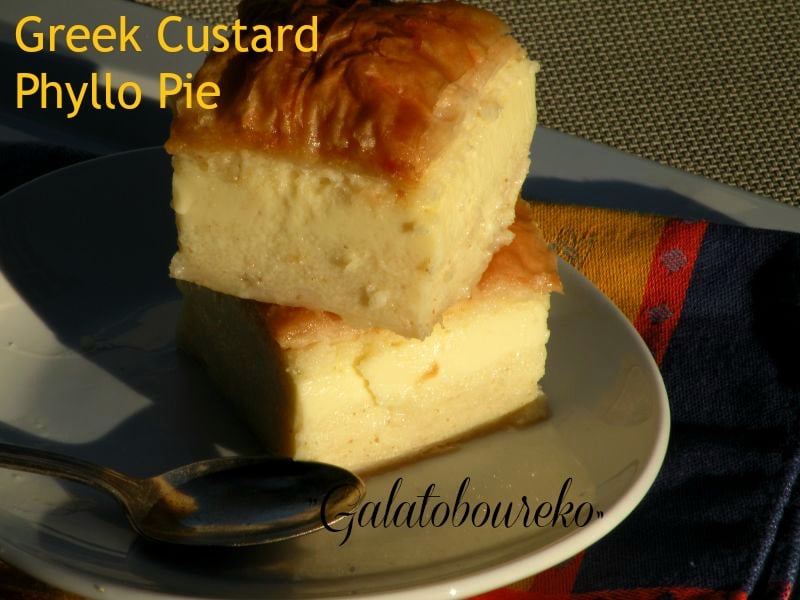
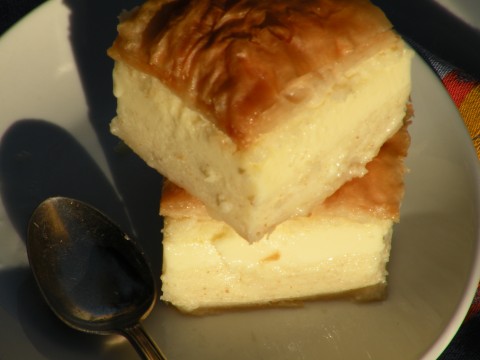
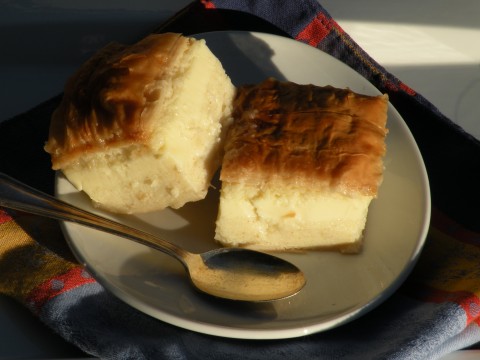
Greek Galatoboureko

by Mary Papoulias-Platis

Post image for Greek Galatoboureko

For thousands of years Greeks have been using thick sheep and goat’s milk to make this rich custard pita pie called Greek Galatoboureko. It’s a sweet, delicate pie, with it’s many layers of crispy phyllo leaves. In Crete and Northern Greece, it’s still called by it’s Turkish name Bougatsa. Every town has there own version, varying the style, ingredients and flavorings. This dessert can be eaten hot or cold. I love it straight out of the oven, warm- while on the other hand the next day it’s delicious cold for breakfast or for an afternoon snack. Bougatsa is filled custard without the syrup, and it’s sprinkled with powdered sugar, a perfect breakfast. Both require making a  custard, so Galatoboureko is often a special treat for company or a special occasion. Below is a excerpt from my collection of Greek Cookbooks. In this book, And the Greeks, it describes how “sweetmeats” all began. If you have trouble finding phyllo, you can but it online at Filo Factory.

This is a very rich custard dessert, so I suggest you cut the pieces small in size, 2-3 inches square.

From my special book : And the Greeks by Allan Macdougall 1942. He was a clever man who first thought up the use of sweetmeats; For he added thus a pleasant lengthening to the feast, and filled the mouths and save the jaws from idealless. -Alexis

Please note: This recipe comes from my sister-in law Vicky. We made this together several times and she is a pro when making this! One thing to remember to adjust is the size of the pan in the recipe from a 11×17 to two smaller pans if needed. We are both caterers and use much larger pans than the average household pans. We both love to cook for a large group!

Greek Galatoboureko

This luscious custard pie is very traditional in the Greek cuisine. Set some time aside to make this but it's worth every bite! It can be served warm, room temperature, or cold. Note: This recipe requires a large baking pan.

Course Dessert
Cuisine Greek
Keyword custard, Galatoboureko, Greek, pastry, phyllo
Servings 24
Author Mary Papoulias-Platis

Ingredients

Filling

  • 1/2 gallon of whole milk
  • 1 cup of semolina
  • 10 eggs, separated
  • 2 cups sugar
  • 1 tablespoon vanilla

Syrup

  • 1 1/2 cups sugar
  • 1 1/2 cups water
  • 2 cinnamon sticks
  • 1/2 lemon, squeezed
  • 1/2 pound butter, melted for brushing phyllo
  • 1 pound phyllo, defrosted

Instructions

  1. Scald milk in a large pot and cook on low.
  2. Slowly whisk in semolina stirring constantly, and bring mixture slowly to a boil and stir until slightly thickened like pudding about 15-20 minutes.

  3. Remove from stove and cool.
  4. Beat egg yolks, 2 cups sugar, and vanilla in a mixer for 5 minutes until pale and fluffy.
  5. In a separate bowl beat egg whites until stiff peaks form.
  6. Slowly whisk eggs yolks into cooled milk mixture.
  7. Fold in egg whites.
  8. Pre-heat oven to 400 degrees.
  9. Butter a deep 11x17 inch baking pan, with 2-3-inch sides.
  10. Place one sheet of phyllo in pan and brush with butter.
  11. Repeat layering until 1/2 of the pound of phyllo.

  12. Pour the custard over the phyllo.
  13. Repeat layering the remaining phyllo on top until all of the sheets are used.

  14. With a sharp knife or scissors, slice through the top layers of the phyllo making 2 or 3 inch squares.

  15. Bake for 10 minutes, reduce to 350 degrees and bake for 45 minutes, or until golden.
  16. Turn off oven and leave pastry in the oven for 10 minutes. Test with a knife, with it comes out clean it’s done.

  17. While the pastry bakes make the syrup.
  18. Place all the ingredients in a medium pot. Bring to a boil and simmer for 10 minutes. Let cool.

  19. Pour the cooled syrup over galotoboureko.
  20. Cut all the way to the bottom with a sharp knife, and serve warm.
  21. Or cool and place in the refrigerator and serve cold.

Recipe Notes

This recipe can be halved, and placed in a smaller pan. Can be frozen before cooking, defrosted, and baked. I cut the 11x17 pan , 4x6 to create 24 pieces.

Note: This filling puffs up quite a bit, but as it cooks it deflates. This is what makes the filling so creamy.


If you are a fan of custard like I am, you may want to try these recipes below from my blog:

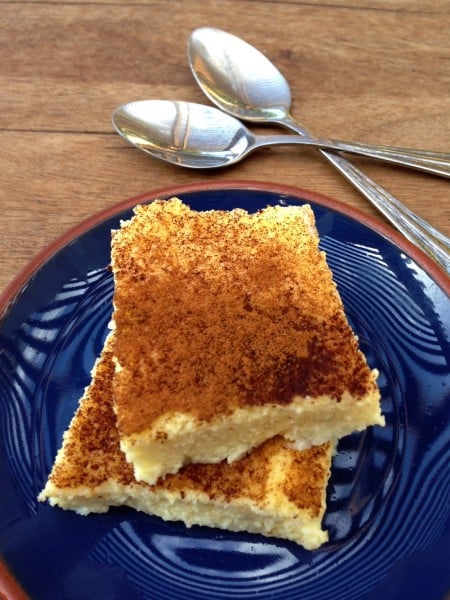
Custard with Orange in Phyllo Rolls Bougatsa

Greek Custard with Cinnamon Galiopita

This recipe is a special holiday treat!

Enjoy, Mary 


{ 4 comments }

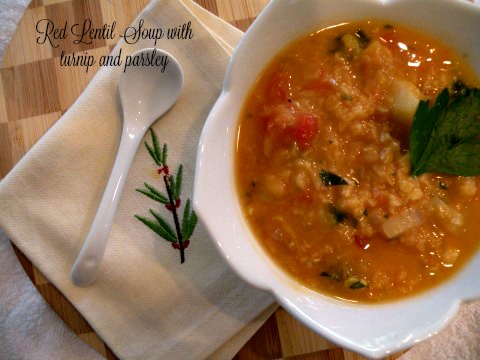
Red Lentil with Turnip and Parsley

by Mary Papoulias-Platis

Post image for Red Lentil with Turnip and Parsley

Lentils are not only for soups! They are vey versatile adding them to salads, stews, and used fresh-cooked as a side dish. But, I do love soups and lentil dishes all year round. Brown lentils are sold with their seed coat on, and have a grayish-brown exterior and a creamy interior, a staple in the Greek diet. Lentils provide you with protein, calcium and vitamins A and B, iron, and fiber.

A traditional Greek lentil soup is made from the brown variety. Red lentils bring a new flavor to my taste buds, a smoother and creamier consistency. Red lentils are smaller, rounder, and sans seed coat, popular in many cultures including  the Middle-East, India, and Morocco. This tiny-shaped pulse has long been used as a meat substitute for centuries. Give these a try and you will be surprised with the new flavors of red lentils.

Lentils are high in nutrients:

      • Lentils reduce your risk of chronic disease such as diabetes, obesity, cancer and heart disease.
      • Their rich content of protective plant compounds called phenols, help with anti-inflammatory properties.
      • A big source of plant protein.
      • Heart -healthy, lowers blood sugars, and improves your digestive tract.


Red Lentil Soup with Turnips

Perfect for a plant-based, vegetarian and any diet with many health benefits for your daily nutrients.

Servings 8

Ingredients

  • 2 tablespoons extra virgin olive oil or water may be substituted
  • 1 diced onion
  • 4 minced garlic cloves
  • 3 finely chopped celery stalks
  • 1 1/2 cups chopped tomatoes
  • 1 1/2 cups red lentils
  • 1 peeled and diced turnip
  • 6 cups water
  • 1 teaspoon red wine vinegar
  • salt and pepper to taste
  • chopped fresh flat leaf parsley

Instructions

  1. In a large pot, heat the olive oil over medium heat.

  2. Add onion, garlic, and celery to the pot and cook stirring until tender 6-8 minutes.

  3. Increase heat to high, and add tomatoes and cook for 1 minute.

  4. Add lentils, turnip and water, bring to a boil, then reduce heat to a simmer.

  5. Cook for 20-25 minutes until lentils are tender.

  6. Stir in chopped parsley, vinegar, salt and pepper. Season to taste.

  7. Don't skip the parsley or vinegar, it adds freshness that you need for the lentils.

This recipe can be use for the Lenten Season, leaving out the olive oil for water.

You may also enjoy:

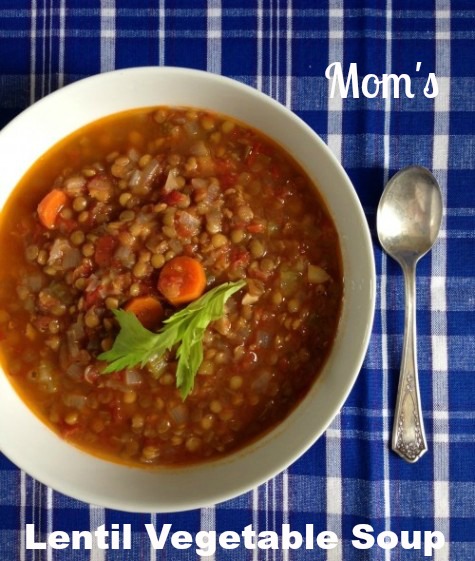
Mom’s Lentil Vegetable Soup

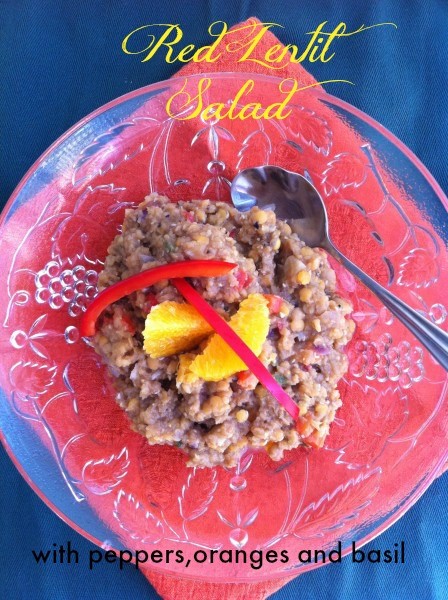
Red Lentil Salad with Red Peppers, Oranges and Basil

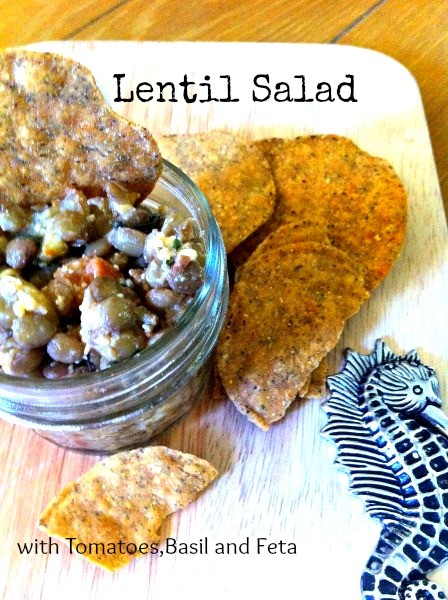
Cold Lentil Salad with Tomatoes, Basil and Feta

Stay Warm,

Mary 


{ 1 comment }

Greek Butter Cookies Kourambiethes

by Mary Papoulias-Platis

Post image for Greek Butter Cookies Kourambiethes

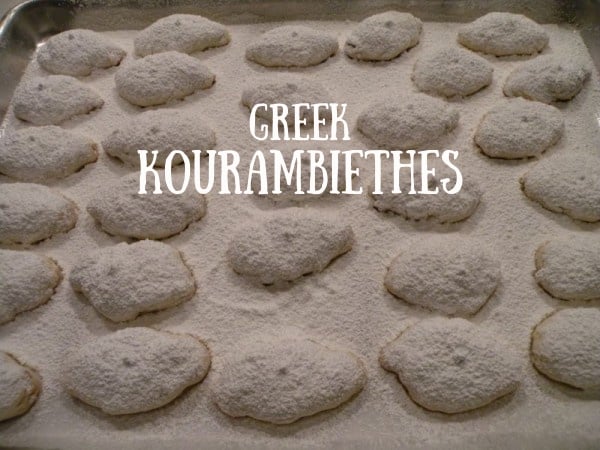
My favorite cookies of all times is the Greek Butter Cookies, Kourambiethes!

Biting into a Greek Butter Cookie with it’s pillowy soft texture takes me back to family memories in the kitchen with my mother. These cookies are called Kourambiethes. Holidays in the Greek tradition depict which cookie will be served to fit each occasion. These Greek butter cookies are also baked for weddings, baptisms, name days and other festive occasions. I will never forget my aunts arguing before my wedding date as to who will be baking what cookie or dessert for my wedding. I think every Greek pastry was represented there that night. In our family we have always placed a whole clove in the center of each cookie before baking them in the oven. As kids, I never appreciated the taste of the clove, but as I got older and started baking, I enjoyed that warm bite of clove on top of the cookie which added a nice surprise.

I do make these Greek Butter cookies by hand in a large bowl. This is the way my mother taught me. There is something to be said about the feel of the dough coming together as it cleans the edges of the bowl when ready. This recipe can be halved.

Greek Butter Cookie Kourambiethes

Why I use cake flour: Swans Down is made from the finest American soft winter wheat and repeatedly sifted so that it’s 27 times finer than all-purpose flour. Swans Down Cake Flour is a pure soft flour that does not contain a leavening agent or salt. It is the perfect flour for all of your special baking needs.


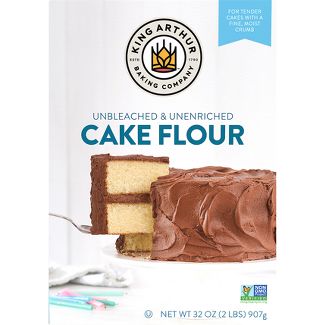
King Arthur also has a cake flour: It contains the perfect amount of protein to give your cake structure and create the texture you’re after. Our cake flour yields higher-rising, tender cakes with a fine, moist crumb.

Greek Butter Cookies Kourambiethes

These are Traditional Greek butter cookies are baked for special occasions, weddings, Christmas, and Easter. This makes a big batch, the recipe can be cut in half. How to halve a recipe with one egg: Crack the egg and whisk together the yolk and whites. Then measure out half.

Course Dessert
Cuisine Greek
Keyword Christmas, cookies, dessert, Greek, holidays
Servings 45 cookies
Author Mary Papoulias-Platis

Ingredients

  • 3/4 package Swan's Down Cake Flour (any cake flour) (32 ozs. per box)
  • 1 egg, separated
  • 1 pound sweet butter, melted and cooled
  • 1 cup powdered sugar
  • 1 teaspoon vanilla
  • 1/2 cup fresh orange juice
  • 1/2 teaspoon baking soda
  • 1 1/2 teaspoon baking powder
  • 1 small pkg. slivered almonds, coarsley chopped, toasted lightly
  • whole cloves for center of each cookie, optional
  • 1/2 pound powdered sugar for topping

Instructions

  1. Place melted butter in mixer and beat for 20 minutes until light in color. The butter will change from medium yellow to a pale color.

  2. Remove butter from mixer, and place in large bowl.
  3. Beat the egg yolk with a fork, and add to the butter and mix well with a wooden spoon or your hand. (If you halve the recipe, beat the egg, then divide.)

  4. Beat the egg white with a clean fork and gently fold into butter. (If you halve the recipe, beat the egg white, then divide in half.)

  5. Add powdered sugar and vanilla. Mix by hand or spoon.

  6. Place the baking soda and powder in a cup and stir in the orange juice. (Do this over the bowl, it may overflow)
  7. Pour into the butter mixture and blend with hands. (or spoon)

  8. Add flour slowly until incorporated thoroughly. (Do not over-mix)
  9. If the dough pulls away from the bowl and leaves it clean, the batter has had enough flour.
  10. Add the toasted slivered almonds.
  11. Shape into oval or round flat cookies by hand. Add a clove in the center of the cookie. (optional)
  12. Line a baking sheet with parchment or a liner.
  13. Bake cookies at 350 degrees for 15-20 minutes.
  14. Remove from pan and place on to rack to cool. (do not place sugar on them when cookies are warm- sugar will melt)

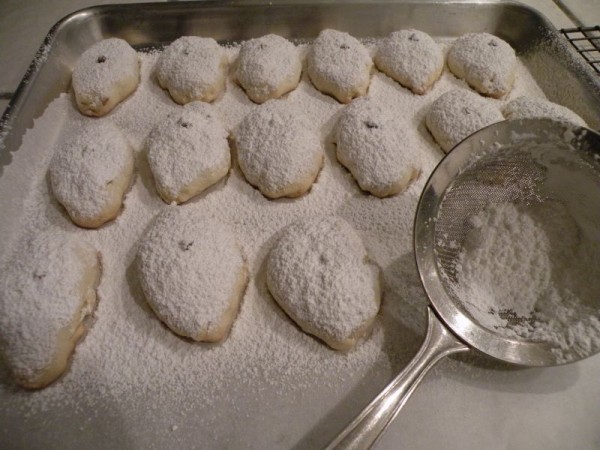
  15. Shift powder sugar on platter and place cookies on platter. Sprinkle with powdered sugar until covered.

More Greek Cookies you can bake:

Melomakarona Honey Drenched Spice Cookies

Greek Cookie Melomakarina

Greek Easter Cookies

Greek Easter Cookie Koulouria


Have a Beautiful Holiday,

Mary

{ 4 comments }

Happy New Year! “Kali Chronia” 2012

by Mary Papoulias-Platis

Happy New Year to all my followers and fellow bloggers!

New Year’s Day in the Greek Orthodox faith is celebrated with the celebration of St. Basil and the cutting the Greek bread, “Vasilopita” . St. Basil the Great is observed on  January 1 and is also celebrated and all names of friends and family like our Bills, Vasili, Vaso,and Vickys. St. Basil is one of the three great church hierarchs along with St. John, and St. Gregory. St. Basil worked as a missionary in the fourth century as a missionary, monk, and philanthropist.  The bread is in his honor, along with the gifts, and special songs and the cutting of the bread.


A short poem recited by children on New Year’s Eve for the cutting of the Vasilopita is:

I take the knife and put it in
my father’s hand,
So he can cut the Vasilopita
and give one slice to me!

 To all my listeners, followers, and family, thank-you for watching, listening and cooking along with me these past few years on my blog. It’s been exciting exploring beliefs, religious holidays, and trying to better understand all the Greek traditions we have held on to here, in America for so many generations. And to everyone in Greece who have made my travels to your towns and cities such a deeply unforgettable educational experience, so that I may come home and write about my culture with enthusiasm and meaningful words.

{ 0 comments }
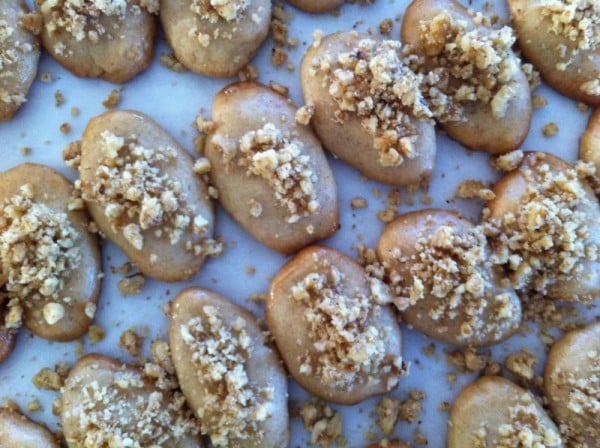
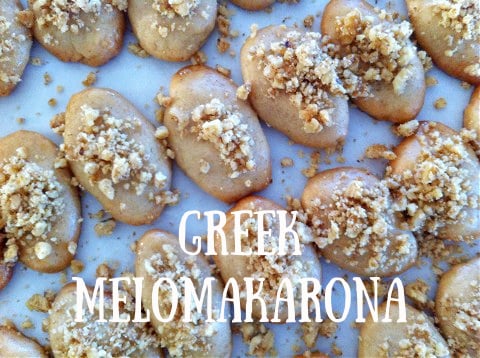
Post image for Melomakarona Honey Drenched Spice Cookies

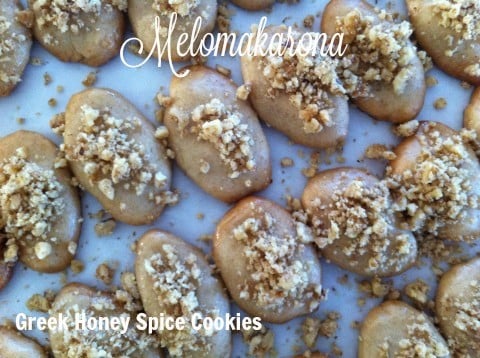
These honey spiced cookies called “Melomakarona”are our family traditional cookies during the holidays. But, it doesn’t mean you can’t make them year-around. Every Greek home has their own recipe, I compare it to the chocolate chip cookie in all American homes. Traditional recipes are passed down from generation to generation and this recipe comes from my mother Voula and her sister Liza’s recipe book, which I cherish and turn to often for my comfort food. Growing up on a farm, my mother had access to honey, so her two favorite desserts were baklava and these honey-drenched spice cookies. Her recipes were pantry ingredients and what they had in their family garden. I choose to eat and create recipes with simplicity as well, and enjoying the seasonal harvest of my garden. I truly believe recipes should be shared, not kept in private. You never know who might be reading this, someone who may have had the same childhood memories, someone with a lost family recipe or someone whose parents may have passed without leaving any family recipes. So enjoy every morsel of these spectacular traditional cookies.

This recipe calls for cake flour which makes the cookies lighter. I tend to use Swans Down or King Arthur in the recipe. If you have only regular AP- all purpose flour, that will work as well. If using regular flour buy 3- 31/2  pounds of flour, and a little extra if you need more.


Melomakarona - Honey-Drenched Spice Cookies

One of a kind recipe! These cookies are unforgettable with their sweet-honey smell.
Course Cookies
Cuisine Greek
Keyword cookies, Greek, holidays, honeycookie, Melomakarona
Author Mary Papoulias-Platis

Ingredients

Dough

  • 1 1/2 boxes cake flour or all-purpose flour,

    Note: 1 box of cake flour = 32.ozs., 2lbs., 907g. If using all -purpose 3-31/2 lbs. flour.

  • 1/2 pound sweet butter, softened
  • 2 cups vegetable or olive oil
  • 1 cup sugar
  • 1 egg
  • 1 small glass of whiskey or brandy
  • 1 teaspoon cinnamon
  • 1 teaspoon allspice
  • 1 teaspoon ground cloves
  • 1 teaspoon baking soda
  • 1 teaspoon baking powder
  • 1 cup fresh orange juice

Honey Syrup

  • 2 cups honey
  • 1 cup sugar
  • 1 cup water
  • 1-2 cinnamon sticks
  • peel of 1/2 of orange
  • 1 cup finely chopped walnuts, topping

Instructions

Cookie Batter

  1. Beat softened butter in mixer bowl for twenty minutes until pale in color.
  2. Beat in oil, sugar, egg, whiskey or brandy and spices. Remove from mixer and place in a large bowl.
  3. Over the large bowl of butter mixture, mix orange juice with the baking powder and baking soda until it turns foamy. Add to mixture and stir until combined.
  4. Add flour slowly by hand until dough is slightly sticky and can be formed into a cookie. Add enough flour until the dough releases from the side of the bowl. Do not over mix or add too much flour.
  5. Place about one 1-2 tablespoons of dough in your palm and form cookie into a round or oval cookie by hand.
  6. Cookies will rise so make them small. Flattened with fingers slightly.
  7. Bake in a 350 degree oven for 25-30 minutes.
  8. At room temperature dip the cookies in the warm syrup for a few minutes, turning once or twice.
  9. Sprinkle with walnuts.

Recipe Notes

Makes about 95 cookies. (can be halved)
Note: Cookies can be frozen at this time before baking, or kept in the refrigerated for weeks.


You may also enjoy baking the following:

Greek Butter Cookies

Greek New Year’s Bread

Happy Holidays!

Best in Health,

Mary 

{ 5 comments }
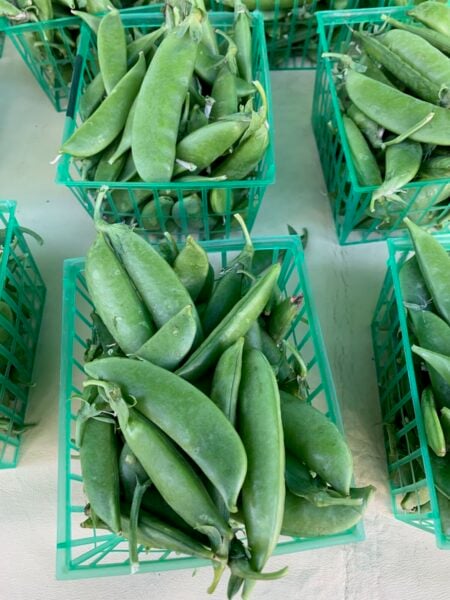
Shrimp with Mustard Vinaigrette

by Mary Papoulias-Platis

Post image for Shrimp with Mustard Vinaigrette

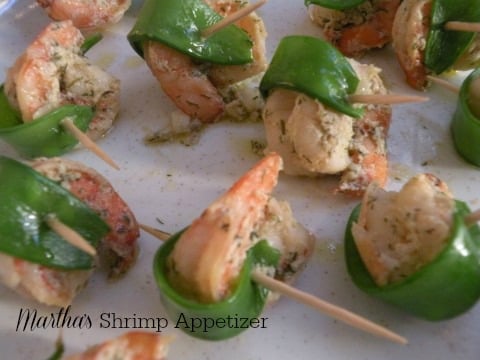
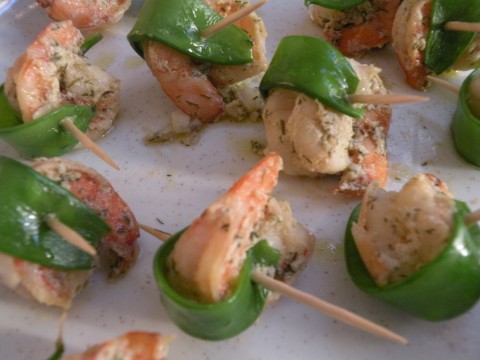
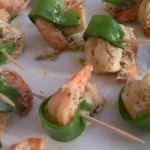
Shrimp is always on my appetizer list during the busy holiday season, along with the Hot Fajita Wings with Guacamole and the Spinach Stufffed Mushrooms.  These three simple appetizers compliment each other and will satisfy your guests while the  dinner is prepared or as an additional to your cocktail party. Finding appetizers that can be prepared ahead of time is the key to a successful party. The marinade is the perfect balance with the crisp green snow peas. You may substitute the snow peas if you are unable to find them with a crisp slice of  cabbage, red pepper,or jicama. (no onion)  Prepare the shrimp and marinate the night before and place in a zip lock bag, then refrigerate. Attach the snow pea to the shrimp with a toothpick at the last moment before serving . Can be served cold or at room temperature.

Snap Peas can be found at your local farmers market, or your local health food store. If not, grab a packet of seeds and pop them in your garden. They happen to be my favorite winter vegetable to grow.

  • Snap peas are an excellent source of vitamin K, which plays an important role in keeping your skeletal system strong.
  • Snap peas are also full of potassium, which is an important mineral for maintaining a healthy heartbeat.
  • Snap peas are also a great help for your immune system. They are rich in beta-carotene and vitamin A, which are important for the growth of immune cells.
  • For more health benefits visit, WebMD.

Shrimp with Mustard Vinaigrette

Makes 15-20 servings
Course Appetizer
Cuisine American
Keyword mustard, shrimp, snowpeas, vinaigrette
Author Martha Stewart

Ingredients

  • 1 bay leaf
  • 1 pound large shrimp, peeled and deveined
  • 15-20 snow peas
  • Vinaigrette
  • 1/2 cup oil
  • 3 tablespoons red wine or white wine vinegar
  • 3 tablespoons Dijon mustard
  • 1 tablespoons chopped shallots
  • 1 teaspoon finely minced ginger
  • 1 clove garlic, finely minced
  • 1 tablespoon chopped dill
  • pinch sugar
  • salt and pepper to taste

Instructions

  1. Add bay leaf to a large pot of water and bring to a boil. Add the shrimp and cook, stirring constantly, until just done. (2-3 minutes).
  2. Drain shrimp and place in a bowl or large plastic bag.
  3. Mix vinaigrette ingredients in a covered jar. Shake well and pour over shrimp. Refrigerate overnight.

  4. String the peas and blanch in boiling water for 30 seconds. Drain and cool.
  5. Wrap a pea around each shrimp and secure with a toothpick. Serve cold or at room temperature over ice.

  6. The vinaigrette can be made a couple of days ahead. The shrimp can be cooked the day before and marinated. Assemble the day of the event and refrigerate until ready to serve.

  7. Assemble the day of the event.

Enjoy more Appetizer recipes on my blog.

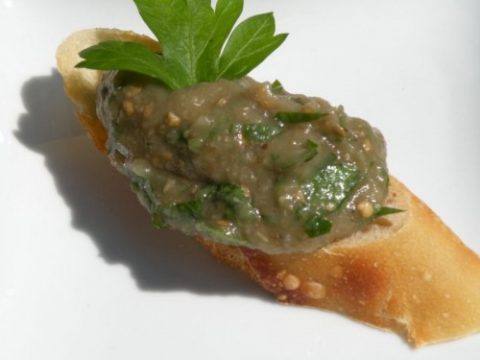
Greek Roasted Eggplant Dip “Melitzanosalata”

Stuffed Mushrooms with Spinach and Thyme

Hot Fajita Chicken Wings with Guacamole

Best appetizer with avocado – try it!

Enjoy cooking,

Mary 

This recipe came from the first Martha Stewart Entertaining Book.


{ 4 comments }
Stuffed Mushrooms with Spinach and Thyme

by Mary Papoulias-Platis

Post image for Stuffed Mushrooms with Spinach and Thyme

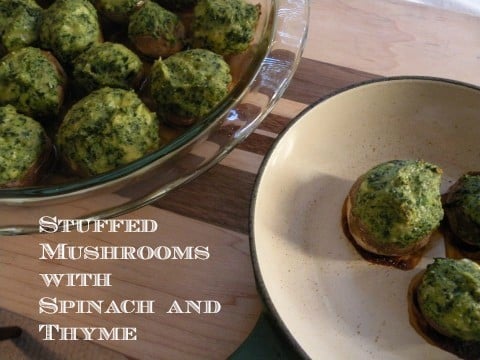
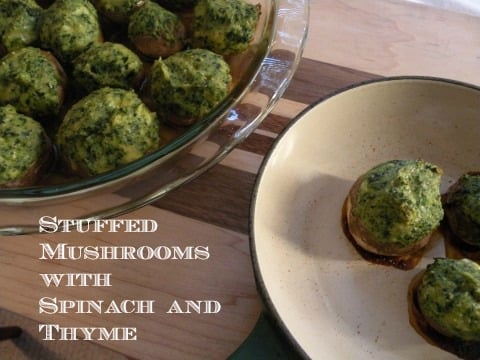
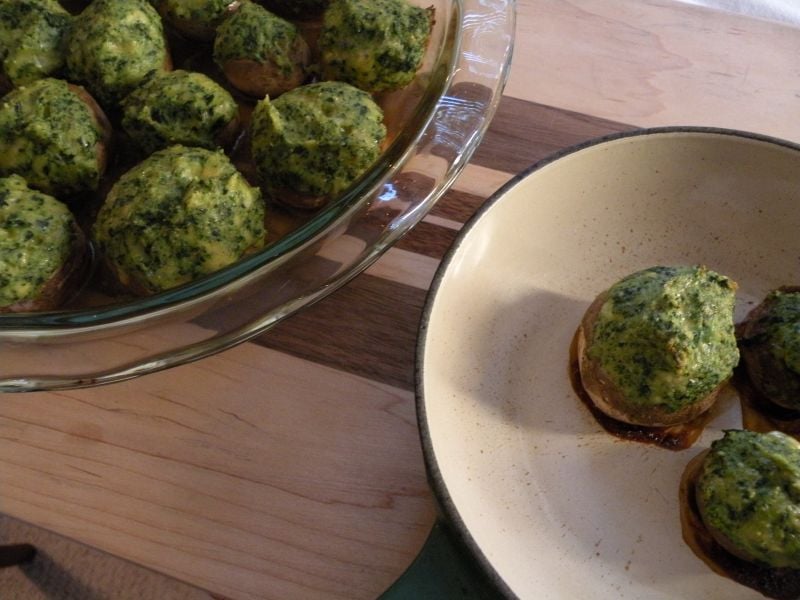
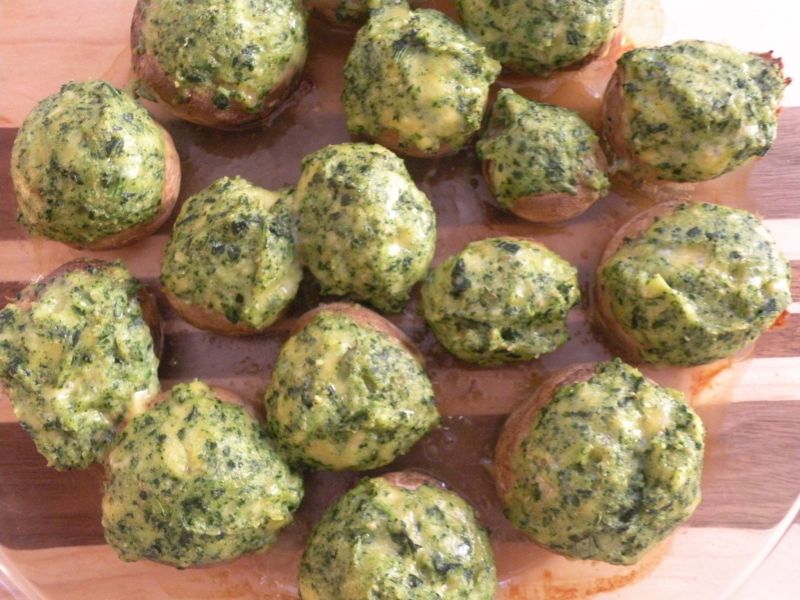
This recipe, Mushrooms stuffed with Spinach came by me so long ago I cannot tell you where it came from. But for years, perhaps over 20 or so, I have been making these stuffed mushrooms. Maybe somebody from my past will remember where this came from and let me know. But they are always requested, so I decided to share this recipe with you just in time for your next holiday! These come in handy if your need a quick appetizer. I’m seldom out of fresh mushrooms in my kitchen. I do buy the frozen spinach souffle and store it in my freezer, for a quick dish.


The mushrooms can be prepared ahead of time, cleaned with stems removed. Then placed in a plastic bag and refrigerate. The filling can be made the night before and refrigerated.  Assemble the day of the party and place in the refrigerator until ready to bake.

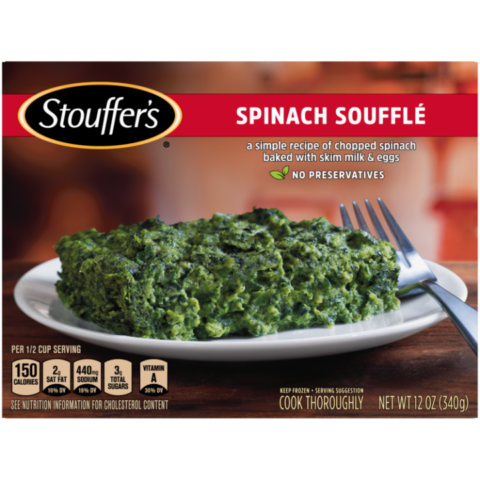
Here is the Stouffer’s Souffle I use for this quick appetizer. If you cannot find it, it can be purchased here.

Stouffer's Souffle


Stuffed Mushrooms with Spinach and Thyme

Try these little morsels at your next party. They can't be beat with the thyme and spinach goodness.
Course appetizer or side
Cuisine California Greek
Keyword appetizer, cheese, mushrooms, spinach
Author Mary Papoulias-Platis

Ingredients

  • 1 package of white button mushrooms, cleaned, dried and stems removed.
  • 6 oz. of frozen spinach souffle, defrosted
  • 1/4 cup shredded cheddar cheese
  • 1/4 cup seasoned bread crumbs
  • 1/4 teaspoon dried thyme
  • 1/4 teaspoon salt

Instructions

  1. Pre-heat oven to 350 degrees. Clean the mushrooms with a paper towel removing all dirt.

  2. Remove the stem. Place stem side up on a sheet tray.
  3. In a medium bowl mix together all the ingredients.
  4. With a teaspoon stuff the mushrooms making a hat like mound.
  5. Bake on the sheet tray for 25-20 until tops are brown. Serve warm on a platter.

  6. Can be made ahead.
  7. Clean mushrooms and remove the stem and refrigerate.
  8. Make the filling and place in refrigerator.
  9. On the day of the event fill the mushrooms in the morning and place in refrigerator until ready to bake.

Note: This is an old recipe so feel free to replace the cheese with new cheeses such as Parmesan. Experiment with fresh herbs for a brighter taste.
Mix with fresh greens such as mustard, but make sure to drain and dry thoroughly before adding to the recipe.

You may also enjoy:

Hot Fajita Chicken Wings with Guacamole

Best appetizer with avocado – try it!


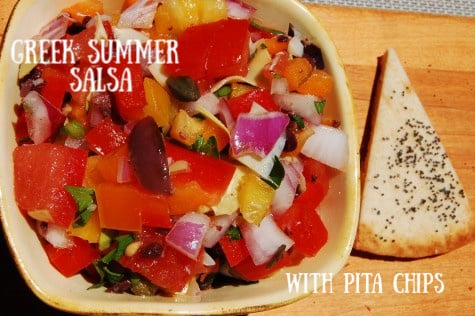
Greek Garden Salsa with Pita Chips

Party On!

Mary 


{ 5 comments }
Hot Fajita Chicken Wings with Guacamole

by Mary Papoulias-Platis

Post image for Hot Fajita Chicken Wings with Guacamole

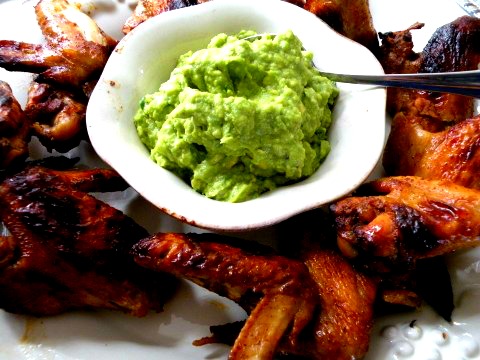
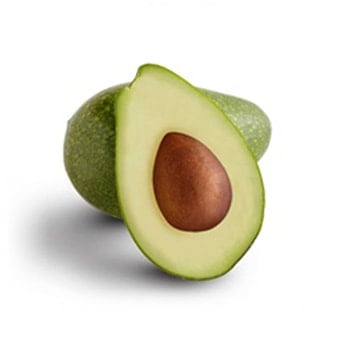
Often I serve these Hot Fajita Wings with Guacamole along with  several appetizers for my holiday parties and dinners.  They are easy to carry to a birthday party or outdoor picnic as well. Put these out and watch how quickly they disappear!  These bites can be made ahead of time (one of my priorities when choosing any appetizer) and finished up right before guests arrive. You can purchase your avocado dip, but I prefer to make it that day, and don’t forget to squeeze the finished guacamole with fresh lemon juice, covered with plastic and placed in the refrigerator until ready to use. Avocados can be hard to fine, so check your local famer’s market and remember, to plan ahead and buy your avocados ahead of time giving them time to ripen. To test for ripeness, check the stem button on the top of the avocado, and if it can be easily removed, your avocado is ready.


A Few Facts About Avocados:

  • These avocados are packed with a variety of other B vitamins, too, including thiamine (B1), riboflavin (B2), and niacin (B3). These help your body convert the food you eat into energy.
  • Avocados are especially rich in niacin, which can fight inflammation in the body and protect your arteries by improving cholesterol and triglyceride levels.
  • Early research now shows that avocados in particular can also help lower “bad” cholesterol, triglycerides, and blood pressure. For more information go to WebMD.


Hot Fajita Chicken Wings with Guacamole

Grab a package of two of these wings, because they will disappear fast! And double the guac for this crowd pleaser.

Course Appetizer
Cuisine California Greek
Keyword appetizer, chickenwings, guacamole
Servings 12
Author Mary Papoulias-Platis

Ingredients

Marinade

  • 1/4 cup honey
  • 2 tablespoons lime juice
  • 2 tablespoons chili powder
  • 2 tablespoons soy sauce
  • 2 -21/2 pounds chicken wings, I prefer the tiny drumettes.

Guacamole

  • 2-3 ripe avocados, peeled and mashed
  • 1/4 onion, chopped
  • 2-3 drops hot sauce
  • juice of 1/2 lemon
  • pinch of salt and pepper

Instructions

  1. In a large plastic bag or bowl combine the first four ingredients. Mix thoroughly.
  2. Add the chicken and marinate at least an hour or overnight in the refrigerator.
  3. Pre-heat oven to 400 degrees.
  4. Cover a sheet tray with oiled foil or parchment paper.

  5. Place chicken on tray and place in oven. Bake for 15 minutes. Turn and bake for another 15 minutes.
  6. (This can be made ahead the day before, refrigerated, and reheated.

Guacamole

  1. Mash the avocados and place in a medium bowl.
  2. Add the rest of the ingredients in the bowl and mix .
  3. For a dipping place next to the wings.

Recipe Notes

The wings can be made the day before and reheated. Keep the sauce simple since the wings have so much kick to them. Note: I double the recipe for a crowd.

I love my avocados, so here are a few other recipes from my blog:

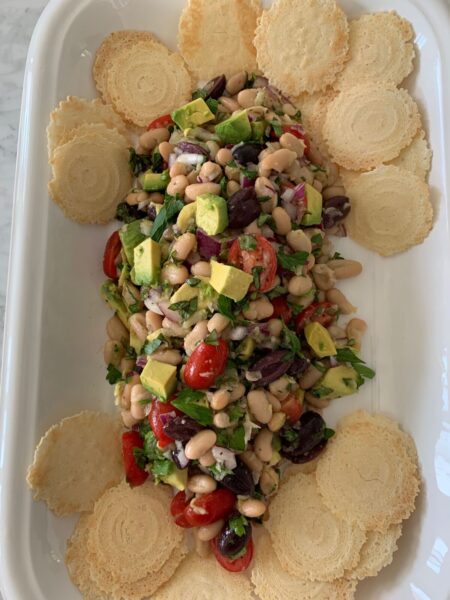
Greek Avocado Ceviche

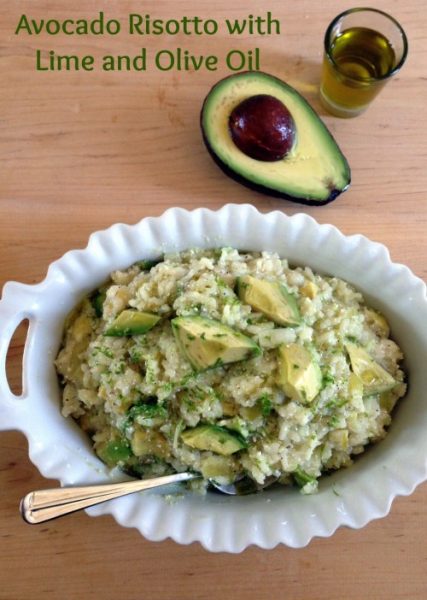
Avocado Risotto with Lime and Olive Oil

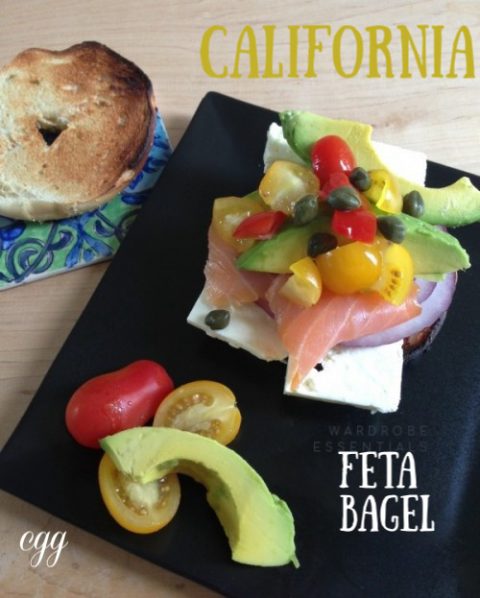
California Feta Bagel with Avocado


Now go throw a party!

Mary


{ 3 comments }